
New Report Warns Investment Shortfall Threatens Africa’s Electrification Goals
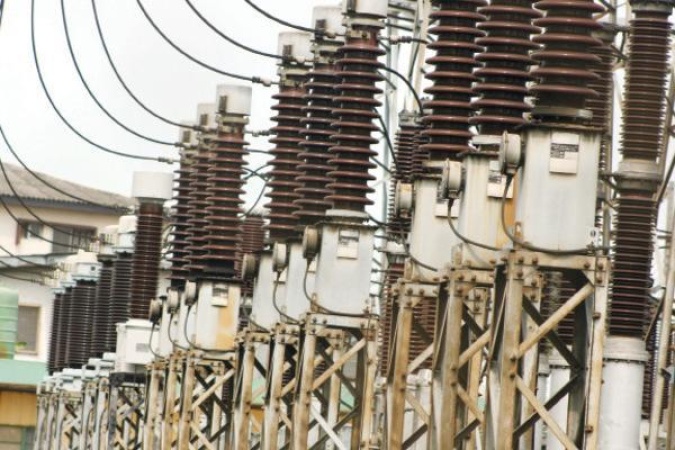
A new study says Sub-Saharan Africa must dramatically increase investment in energy infrastructure, financing innovation and public-private collaboration if it hopes to deliver electricity to hundreds of millions of people by 2035.
Africa’s Energy Access Challenge Remains Vast
DESPITE notable gains in recent years, more than 500 million people across Sub-Saharan Africa still live without access to electricity, highlighting one of the continent’s most persistent development challenges.
A report unveiled at the Africa Energy Forum 2026 by the Global Energy Alliance for People and Planet (GEAPP) and the Lightrock Energy Access Platform (LEAP), with support from The Rockefeller Foundation, estimates that Africa will require approximately $15 billion annually to achieve universal electricity access by 2035.
The findings reveal a significant mismatch between current investment levels and actual funding needs. While the continent requires sustained annual financing of about $15 billion, existing investments remain below $2.5 billion per year, creating a major gap that threatens progress toward universal electrification.
Rural Communities Still Left Behind
According to the report, the greatest challenge lies in extending reliable electricity services to rural and remote communities where conventional grid expansion is often expensive and technically difficult.
Many underserved areas continue to face barriers ranging from inadequate infrastructure to weak financing structures and fragmented service delivery systems.
The report argues that current approaches have failed to adequately address the unique realities of last-mile electrification, leaving millions of households and businesses disconnected from opportunities linked to modern energy access.
Experts noted that electricity remains a critical driver of economic growth, education, healthcare delivery and job creation, making the electrification gap a broader development concern.
Financing Reform Seen as Critical
The report identifies high financing costs and poor risk allocation as major obstacles slowing investment in the energy sector.
Private operators often shoulder demand risks, payment uncertainties and foreign exchange challenges that could be more effectively managed through government-backed guarantees and risk-sharing arrangements.
By reallocating these risks, the report suggests governments and development partners could lower investment costs, improve investor confidence and unlock larger flows of private capital into rural electrification projects.
The study also recommends moving beyond financing models focused primarily on infrastructure deployment toward frameworks that support long-term operations, maintenance and service reliability.
Partnerships Key to Achieving Universal Access
Stakeholders behind the report stress that stronger collaboration among governments, financiers, development institutions and private investors will be essential.
Vice President for Africa at GEAPP, Carol Koech, pointed to recent progress under Mission 300, an initiative aimed at connecting 300 million Africans to electricity by 2030.
According to her, recent achievements demonstrate the impact of coordinated action, but population growth continues to outpace electricity connections in several countries.
The report therefore calls for improved planning, stronger public-private partnerships and innovative financing structures capable of accelerating access while ensuring affordability and sustainability.
Electrification as an Economic Development Tool
Beyond expanding connections, the report emphasizes the importance of ensuring electricity access translates into economic opportunities.
Experts argue that reliable power can boost productivity, support small businesses, create jobs and increase incomes in underserved communities.
The report concludes that universal electricity access remains achievable, but only if governments, investors and development partners significantly increase investment levels while embracing more effective funding models and coordinated implementation strategies.
