
Protests, Petitions Rock APC Primaries Across States
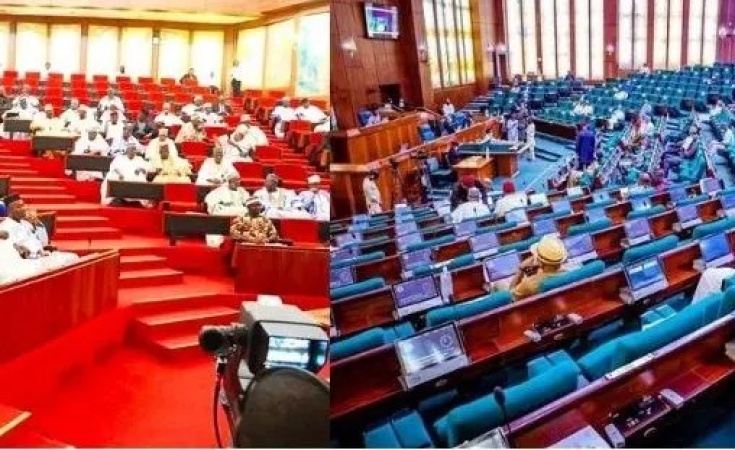
APC Primaries Throw National Assembly Into Turmoil
NO fewer than 70 serving members of the National Assembly on the platform of the All Progressives Congress (APC) are set to exit the federal legislature after failing to secure return tickets during the party’s nationwide primaries ahead of the 2027 general elections.
The development has sparked protests, petitions, violence and allegations of manipulation across several states, exposing deep cracks within the ruling party as internal battles intensify over control of political structures and electoral tickets.
The affected lawmakers include serving senators and members of the House of Representatives, some of whom either lost outright, stepped down, were disqualified or became victims of controversial party arrangements.
Political observers say the scale of the shake-up represents one of the biggest internal political upsets in recent APC history.
Defections Fail To Deliver Political Survival
Among the most notable casualties are former lawmakers elected under opposition parties who defected to the APC in search of political survival.
Rep. Donatus Matthew, popularly known as “Okada Rider,” who moved from the Labour Party to the APC, was disqualified during screening and will not return to the House of Representatives.
Other defectors who failed to secure APC tickets include Esosa Iyawe in Edo State, Senator Neda Imasuen in Edo South, Tochukwu Okere from Imo, Bassey Akiba from Cross River and Dalyop Fom from Plateau State.
Within the Senate, several high-profile lawmakers also lost out, including Senators Ned Nwoko, Saliu Mustapha, Titus Zam, Emmanuel Udende, Diket Plang and Osita Izunaso.
Political analysts believe the outcome reflects growing tensions between old party loyalists and new entrants struggling to establish grassroots acceptance within the APC structure.
Violence, Allegations Mar Ondo Primaries
One of the most dramatic incidents occurred in Ondo State, where Senator Adeniyi Adegbonmire narrowly escaped harm after armed thugs reportedly attacked his polling unit during the senatorial primary.
Witnesses said gunmen stormed the venue in Akure, fired sporadically and disrupted voting after early counting allegedly showed Adegbonmire in the lead.
The incident triggered panic among party members, delegates and journalists, while some women reportedly sustained injuries during the chaos.
Adegbonmire later described the exercise as a “complete charade,” alleging widespread intimidation and violence targeted at his supporters.
Other aspirants in the state also rejected the exercise, accusing party officials of imposition and manipulation.
The violence has renewed concerns over the increasing militarisation and criminalisation of internal party politics in Nigeria.
Delta Primaries Generate Fresh Controversy
In Delta State, uncertainty continues to trail the outcome of the senatorial primaries after the APC national leadership faulted the premature declaration of winners by local primary committees.
APC National Secretary, Ajibola Basiru, clarified that only the National Working Committee possesses the authority to announce final results after reviewing complaints and petitions.
The controversy has thrown the victories of Senators Ifeanyi Okowa, Ede Dafinone and Joel-Onowakpo Thomas into fresh uncertainty.
Meanwhile, the APC National Assembly Primaries Appeal Committee disclosed that it had already received five petitions from aggrieved aspirants and stakeholders in Delta State.
The disputes have heightened tensions within the state chapter of the party, with observers warning that prolonged disagreements could weaken APC preparations ahead of the 2027 elections.
Rejections Spread Across States
Beyond Delta and Ondo, resistance against the primary outcomes emerged in several states.
In Cross River, aspirants for the Central Senatorial District insisted no primary election actually took place across the 66 wards in the district, describing circulating results as fictitious.
In Kaduna, Yusuf Zailani’s campaign organisation rejected the Kaduna Central primary, alleging that no genuine voting occurred.
Kogi APC stakeholders also stormed the party’s national secretariat in Abuja protesting the alleged participation of former Governor Yahaya Bello in the senatorial primary despite claims he was not properly cleared.
Similarly, former Senator Ayo Arise rejected the Ekiti North primary result, accusing officials of result manipulation and vote fabrication.
In Zamfara, aspirant Sani Shinkafi warned that the APC risked repeating the 2019 political disaster that led to the Supreme Court nullifying the party’s victories in the state over irregular primaries.
APC Faces Test Of Internal Democracy
Despite the controversies, some incumbents successfully retained their tickets.
Governors and influential political figures consolidated control in several states, including Kwara, where Governor AbdulRahman AbdulRazaq emerged unopposed for the Kwara Central senatorial ticket.
In Taraba, Senators David Jimkuta and Haruna Manu also secured return tickets.
However, analysts say the widespread petitions, protests and allegations surrounding the primaries now place the APC under pressure to prove its commitment to internal democracy, fairness and transparent conflict resolution.
With appeals already mounting nationwide, many of the disputes may eventually shift from party secretariats to the courts, potentially shaping the political landscape ahead of the 2027 elections.
