
If The Red Wedding Failed: How Saving The Starks Could Have Destroyed Westeros
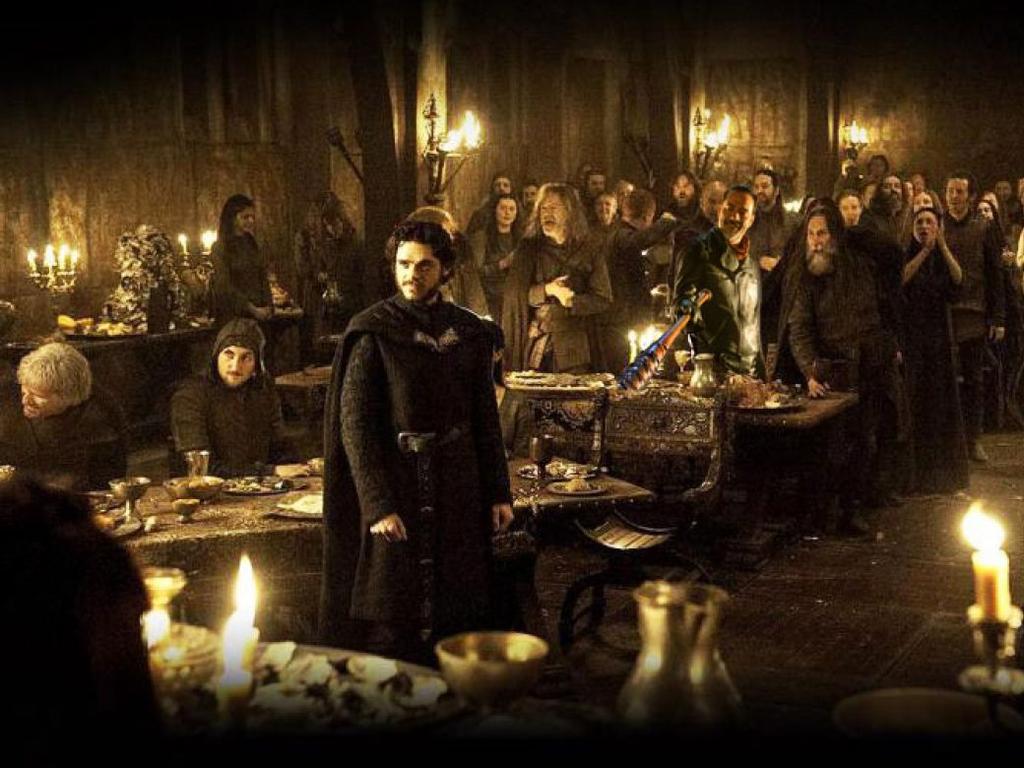
The Red Wedding That Never Happened
FEW events in the classical movie series Game of Thrones altered the political landscape of Westeros more dramatically than the Red Wedding.
The massacre at the Twins was not merely a military ambush. It was a political earthquake.
In a single night, House Stark lost its king, its military leadership, and much of its ability to challenge the Iron Throne. The event effectively ended the Northern rebellion and allowed the Lannisters to consolidate power across much of Westeros.
But what if the conspiracy had failed?
What if Robb Stark discovered the betrayal before the slaughter began?
At first glance, the answer appears simple: the Starks survive, justice prevails, and the North wins.
Yet history—both fictional and real—suggests that political victories often create consequences as dangerous as political defeats.
The Collapse of Treachery
Had Robb uncovered the plot in time, the immediate outcome would have been devastating for the conspirators.
Walder Frey and Roose Bolton would likely have been killed or captured.
House Frey would lose its influence overnight.
House Bolton would never gain control of the North.
The carefully orchestrated alliance between the Freys, Boltons, and the Lannisters would collapse before it could achieve its objective.
For the North, this would be more than a military victory.
It would be the preservation of political legitimacy.
Robb Stark would remain the undisputed King in the North, and Northern unity would survive.
Nigeria and the Politics of Betrayal
The Red Wedding offers a powerful lesson about the role of betrayal in political systems.
Across Nigerian political history, some of the most significant turning points have emerged not from direct confrontation but from elite defections, internal sabotage, and shifting alliances.
Political movements often collapse not because of external enemies but because trusted insiders change sides.
The lesson is universal:
Institutions rarely fall from outside pressure alone.
They often collapse when loyalty inside the system disintegrates.
Had the Red Wedding failed, the North would have avoided the kind of internal betrayal that frequently destroys political coalitions before external opponents ever defeat them.
The End of Tywin’s Masterpiece
The true architect of the Red Wedding was not Walder Frey.
It was Tywin Lannister.
Rather than defeating Robb Stark on the battlefield, Tywin weaponized politics.
He transformed diplomacy, marriage alliances, and personal grievances into instruments of war.
The Red Wedding became one of the greatest political victories in Westerosi history precisely because it achieved through negotiation what armies could not achieve through combat.
If the massacre failed, Tywin’s strategy would unravel.
The Iron Throne would face a prolonged conflict against a motivated and united North.
Instead of ending the war, the Lannisters would find themselves trapped in an expensive struggle with no clear conclusion.
Africa’s Lessons on Political Shortcuts
Across Africa, many governments and political actors have discovered that short-term political victories often create long-term instability.
When leaders prioritize immediate success over sustainable reconciliation, unresolved tensions eventually resurface.
The Red Wedding represents the ultimate political shortcut.
It solved an immediate problem while planting the seeds of future resentment.
Had it failed, Westeros might have been forced into a more difficult but potentially more sustainable political settlement.
The Survival of House Stark
The greatest beneficiaries would obviously be the Stark family itself.
Robb survives.
His mother, Catelyn Stark, survives.
Northern leadership remains intact.
The consequences would ripple throughout the continent.
Arya Stark would likely reunite with her family far earlier.
Sansa Stark might eventually escape King’s Landing and return to a functioning Northern kingdom rather than becoming trapped in the schemes of Petyr Baelish.
The survival of Bran Stark and Rickon Stark would eventually become known, strengthening House Stark even further.
For the first time since Robert’s Rebellion, Westeros would face the emergence of a truly unified Northern political bloc.
The Importance of Stable Institutions
One of the central themes of both real-world politics and Game of Thrones is institutional continuity.
When leadership survives crises, institutions remain functional.
When leadership is suddenly eliminated, chaos often follows.
Nigeria, like many countries, has experienced moments where institutional stability depended heavily on the survival of political structures rather than individual personalities.
The Stark survival scenario demonstrates how continuity of leadership can prevent fragmentation and preserve state capacity during periods of conflict.
A Stronger North, A Stronger Wall
Another major consequence would emerge at the Wall.
With Robb alive and ruling in the North, the Night’s Watch would likely receive substantial military and logistical support.
Jon Snow’s warnings about threats beyond the Wall would be taken far more seriously.
Resources, manpower, and political backing would strengthen the defense of the realm’s northern frontier.
The Wildling invasion might be defeated more effectively.
The North itself would become more secure.
From a strategic perspective, this appears to be an overwhelming positive.
But history rarely rewards simple conclusions.
The Hidden Danger of Stark Success
Ironically, the greatest threat to Westeros may emerge from the very success of House Stark.
A victorious Robb Stark would likely create a strong, independent Northern kingdom.
Such a kingdom would possess:
- military strength,
- political legitimacy,
- popular support,
- territorial security,
- and growing confidence.
The problem is that successful political movements often become less willing to compromise.
Nigeria, Africa and the Challenge of Regional Power
Throughout history, powerful regional actors have frequently complicated national unity.
Whether in Africa, Europe, Asia, or the Americas, strong regional identities can strengthen local governance while simultaneously weakening broader political integration.
The challenge is balancing autonomy with collective security.
A confident independent North might see little reason to submit to external authority.
From its perspective, independence would appear both justified and successful.
Yet political fragmentation often creates vulnerabilities larger than any individual region can address alone.
The Daenerys Problem
The arrival of Daenerys Targaryen would introduce a new geopolitical crisis.
In the original timeline, Jon Snow eventually sought alliance with Daenerys because survival required cooperation.
A strong Robb Stark-led North might reach a very different conclusion.
Why submit to another monarch after winning independence?
Why recognize a foreign claimant backed by dragons?
The result could be a prolonged power struggle between competing centers of legitimacy.
Rather than uniting against common threats, political leaders might remain focused on preserving their own authority.
When Politics Distracts From Existential Threats
This brings us to the most important lesson of the scenario.
The greatest danger to Westeros was never the Lannisters.
It was never the Boltons.
It was never Daenerys.
The true threat was the White Walkers.
Yet political systems often struggle to recognize existential dangers when leaders remain consumed by immediate rivalries.
A Global Warning
This pattern extends far beyond fiction.
Across the world, governments frequently devote enormous energy to political competition while larger threats continue to grow.
These threats may include:
- terrorism,
- climate change,
- food insecurity,
- economic instability,
- technological disruption,
- pandemics,
- or regional conflict.
Political elites often become trapped in short-term struggles for power while neglecting challenges that threaten everyone equally.
The White Walkers symbolize these overlooked dangers.
They represent the crisis that does not care about ideology, borders, ethnicity, political parties, or historical grievances.
The Great Irony of the Red Wedding
The failure of the Red Wedding would undoubtedly save House Stark.
It would preserve Northern unity.
It would destroy the Freys and Boltons.
It would weaken the Lannisters.
It would create a stronger and more stable North.
Yet that same success might also deepen the political fragmentation of Westeros.
A stronger North could become less willing to cooperate.
A stronger North could resist compromise.
A stronger North could delay the alliances necessary to confront the true enemy.
And therein lies the great irony.
The Ultimate Political Lesson
The alternative history of a failed Red Wedding reveals a timeless truth about governance.
Not every victory serves the broader public good.
Sometimes a political triumph for one group creates strategic vulnerabilities for everyone else.
From Nigeria to Africa to the wider world, history repeatedly demonstrates that societies often struggle not because they lack strong leaders, but because strong leaders fail to unite around common threats.
The Red Wedding’s failure might have saved the Starks.
But it could also have left Westeros even more divided when unity mattered most.
And in politics, as in history, division often proves far more dangerous than defeat.
