
ASUU Warns FG Over Delayed 2025 Agreement Implementation
Growing Frustration Over Unfulfilled Promises
THE Academic Staff Union of Universities (ASUU), Owerri Zone, has raised fresh concerns over what it described as the Federal Government’s slow and uncoordinated implementation of the 2025 agreement reached with the union, warning that continued delays could erode the fragile trust built during negotiations.
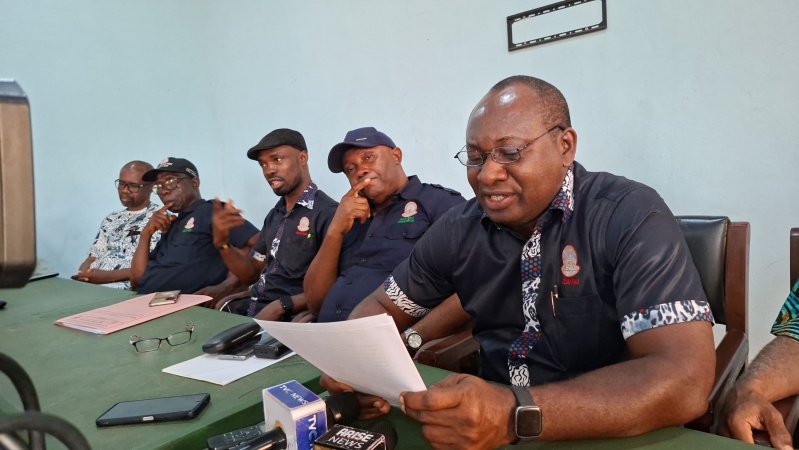
Speaking during a press briefing at Nnamdi Azikiwe University, the Coordinator of ASUU Owerri Zone, Dennis Aribodor, said lecturers had maintained restraint since the agreement was signed in December 2025 and formally unveiled in January 2026.
However, he noted that recent developments have created anxiety among union members, particularly due to the government’s failure to establish the Implementation Monitoring Committee (IMC), which was expected to oversee the proper execution of the agreement.
According to him, the absence of the committee has resulted in inconsistent implementation across federal universities, with some institutions allegedly applying selective interpretations of the agreement.
Universities Accused of Selective Payments
Aribodor alleged that administrators in several federal universities were choosing which allowances to pay, contrary to the spirit of the agreement.
He listed the affected entitlements to include Consolidated Academic Tool Allowances (CATA), Earned Academic Allowances (EAA), and Professorial Allowances (PA), insisting that all components were expected to be fully integrated into the Consolidated Academic Staff Salary Structure.
“We are apprehensive that the goodwill generated after the signing of the agreement is fading quickly,” he said.
He further lamented that while a few state governments had shown willingness to implement parts of the agreement, many others had remained largely inactive.
Imo, Anambra Universities Face Lingering Challenges
The union also highlighted unresolved issues affecting state-owned universities within the zone, particularly Chukwuemeka Odumegwu Ojukwu University and Imo State University.
At COOU, ASUU accused the state government of failing to pay withheld salaries linked to the 2020 and 2022 strike actions, while also neglecting the implementation of wage awards and the ₦70,000 minimum wage.
For IMSU, the union identified concerns ranging from delayed promotions and unpaid arrears to the continued retention of the institution under the Treasury Single Account policy of the state government.
ASUU argued that the TSA arrangement undermines university autonomy and hampers effective administration.
Strike Threat Still Uncertain
Although the union stopped short of announcing industrial action, Aribodor admitted that the continued failure to address the issues could deepen tensions within the university system.
He stressed that lecturers do not benefit from strikes, noting that disruptions negatively affect both staff welfare and students’ academic progress.
The briefing adds to mounting pressure on the Federal Government to stabilise Nigeria’s tertiary education sector amid recurring disputes over funding, welfare and institutional autonomy.
