
2027 Race: Tinubu, Atiku, Obi Court A Changing Northern Electorate
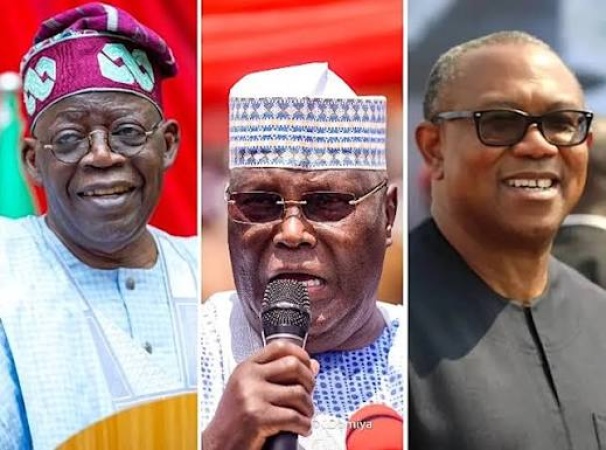
2027 Election: New Political Calculations Reshape the Battle for Northern Nigeria
Abuja Emerges as Centre of Pre-Election Negotiations
NIGERIA’S political atmosphere is becoming increasingly active as major political actors intensify consultations ahead of the 2027 presidential election.
Within Abuja’s hotels, private residences and political offices, discussions over coalition-building, candidate selection and regional support have become more frequent, reflecting growing efforts to consolidate political advantage before formal campaigns begin.
Recent comments by former governors Rabiu Musa Kwankwaso and Ali Modu Sheriff have further amplified debate over Northern voting patterns.
While Sheriff suggested that Peter Obi would struggle to gain acceptance among Northern voters, Kwankwaso rejected any attempt by individuals to claim authority over the region’s electoral preferences.
The exchange has since generated widespread political commentary, highlighting broader questions surrounding the future direction of Northern politics.
Revisiting the Myth of Buhari’s ’12 Million Votes’
One of the recurring themes in discussions ahead of 2027 is whether former President Muhammadu Buhari’s celebrated electoral base still exists as a unified political force.
Buhari’s repeated presidential contests established him as one of Nigeria’s most influential opposition figures before his eventual victories in 2015 and 2019.
His popularity, particularly across the North-West and North-East, inspired the popular expression that he possessed “12 million votes.”
However, official election data reveal significant fluctuations across different election cycles.
His vote total declined considerably in 2007 before recovering strongly in 2011, illustrating that electoral support was influenced by prevailing political circumstances, alliances and the identity of competing candidates.
Analysts therefore argue that Buhari’s electoral strength reflected exceptional personal credibility rather than ownership of a permanently transferable voting bloc.
A Region Defined by Multiple Political Traditions
Historical evidence suggests Northern Nigeria has never been politically homogeneous.
Different ideological movements have emerged across successive republics, while regional interests have evolved alongside changing social and economic realities.
Today, issues such as insecurity, youth unemployment, economic hardship, agricultural productivity, education and religious coexistence increasingly influence electoral decisions across the region.
Urban centres including Abuja, Kaduna, Kano and Ilorin are also producing younger voters whose political preferences are shaped more by governance and economic opportunity than by traditional political alignments.
These developments have made electoral forecasting considerably more complex than in previous decades.
Presidential Aspirants Adjust Their Campaign Strategies
Each leading presidential hopeful appears to recognise the strategic importance of Northern Nigeria.
President Bola Tinubu seeks to consolidate support through the APC’s extensive political structures and record in government.
Former Vice President Atiku Abubakar continues to rely on decades of political relationships across several Northern states.
Peter Obi hopes to build on the momentum generated among younger voters during the last election cycle, while Rabiu Kwankwaso remains influential through his grassroots political organisation in Kano State.
Political observers believe coalition-building, regional partnerships and issue-based campaigns will become increasingly important as the election approaches.
Northern Electorate May Determine Nigeria’s Next Political Direction
Beyond political rhetoric, many observers argue that Northern voters are becoming increasingly independent in their electoral choices.
Communities across the region continue to grapple with rising living costs, insecurity, unemployment, declining agricultural productivity and demands for better governance.
These concerns, analysts say, could outweigh traditional political loyalties during the next presidential election.
While politicians continue competing for endorsements and regional influence, the ultimate decision may rest with an electorate that has become more diverse, more informed and less willing to vote solely along historical political lines.
As Nigeria moves steadily towards 2027, the contest for Northern support is expected to remain one of the country’s most consequential political battles, with its outcome likely to shape both the election and the future trajectory of the nation’s democracy.
