
Warri Youths Storm INEC, Threaten Poll Boycott Over Delayed Ward Delineation
Abuja Protest Highlights Electoral Dispute
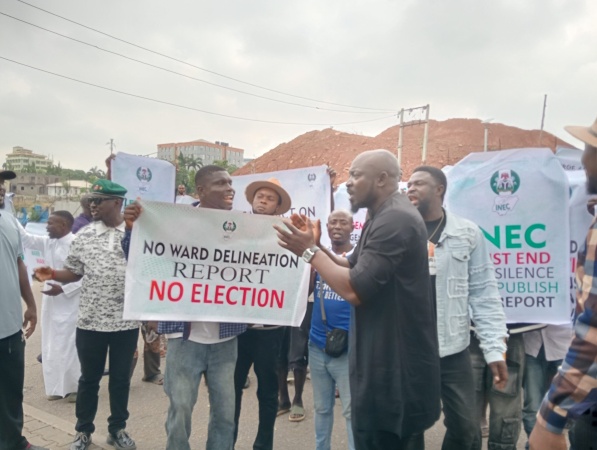
A protest by youths from Delta State’s Warri Federal Constituency has brought renewed attention to a lingering electoral dispute, as demonstrators stormed the headquarters of the Independent National Electoral Commission in Abuja.
The protest centred on the commission’s delay in implementing a ward delineation exercise reportedly backed by a ruling of the Supreme Court of Nigeria.
Placards bearing slogans such as “INEC Must Obey Supreme Court Judgment” underscored the protesters’ insistence on immediate action.
Delineation Dispute and Representation Concerns
Ward delineation—an essential component of electoral fairness—determines how constituencies are structured and how representation is distributed.
Protest leaders argued that delays in releasing the delineation report could distort representation and marginalise certain communities within Warri.
Johnny Toms of the Ijaw Youth Council emphasised that the issue goes beyond administrative delay, framing it as a matter of justice and constitutional compliance.
Rising Frustration and Political Undertones
The protest revealed growing frustration among local stakeholders, who accuse INEC of inconsistency and lack of transparency.
Demonstrators claimed that the delineation process had already involved key ethnic groups and questioned why the final stage remains stalled.
Some protesters went further, alleging political interference and warning that continued delays could inflame tensions in an already delicate region.
Threats to Future Elections
Perhaps the most alarming aspect of the protest was the explicit threat to future elections.
Protesters warned that without implementation of the delineation exercise, participation in the 2027 general elections could be jeopardised.
Such threats, while not uncommon in politically charged disputes, highlight the fragile balance between electoral administration and public trust.
INEC’s Position and the Road Ahead
INEC officials, through a representative, acknowledged receipt of the protesters’ petition and promised to relay their concerns to the commission’s leadership.
While the response signalled procedural engagement, it fell short of providing immediate clarity or timelines for resolution.
Implications for Nigeria’s Electoral Stability
The Warri protest illustrates how unresolved administrative issues can escalate into broader political crises.
As Nigeria moves closer to the 2027 elections, the credibility of electoral institutions will depend not only on conducting polls but also on addressing underlying disputes promptly and transparently.
Failure to resolve the delineation issue risks turning a local grievance into a national concern—one that could test the resilience of Nigeria’s democratic process.
