
US Blockade Cripples Iran’s Maritime Trade As Gulf Tensions Escalate
A Sudden Halt to Iran’s Maritime Lifeline
A sweeping naval blockade imposed by the United States has effectively brought Iran’s sea-based economic activity to a standstill, marking a dramatic escalation in tensions across the Middle East.
According to US Central Command (CENTCOM), the blockade—implemented in less than 36 hours—has successfully halted all economic maritime traffic into and out of Iranian ports. The operation targets vessels of all nations attempting to access Iran’s coastal trade routes, cutting off what analysts describe as the country’s primary economic artery.
Given that roughly 90 percent of Iran’s trade depends on maritime routes, the move represents a significant economic chokehold with immediate domestic and global implications.
How the Blockade Was Enforced
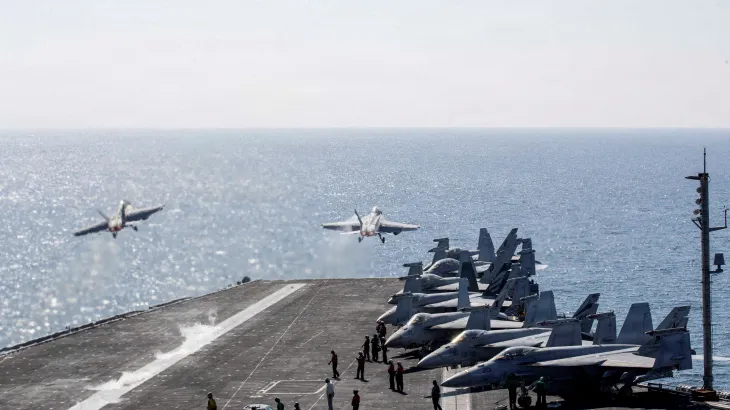
The US military has deployed an extensive force to enforce the blockade, including more than 10,000 personnel, naval warships, and aerial surveillance assets.
Within the first 24 hours, at least six merchant vessels attempting to leave Iranian ports were intercepted and ordered to turn back—without direct confrontation.
Officials say the operation has achieved near-total compliance, with no vessels successfully breaching the blockade in its initial phase.
The enforcement strategy has focused on controlling key maritime routes in the Gulf of Oman and surrounding waters, while avoiding more volatile chokepoints like the Strait of Hormuz, which has already been a flashpoint in the ongoing conflict.
Roots of the Crisis
The blockade follows the collapse of diplomatic negotiations between the United States and Iran, which had aimed to stabilise tensions after weeks of military confrontation.
The broader conflict—part of the ongoing 2026 Strait of Hormuz crisis—has already disrupted global shipping routes and heightened geopolitical uncertainty.
In response to earlier US and allied strikes, Iran had moved to restrict access to the Strait of Hormuz, a critical corridor through which a significant portion of global oil supply typically passes.
The US blockade is widely seen as a countermeasure designed to reassert control over regional shipping and pressure Tehran into renewed negotiations.
Economic Impact on Iran
The immediate effect on Iran’s economy is severe. With maritime trade effectively frozen, exports—particularly oil and petrochemicals—have been halted, depriving the country of critical revenue streams.
Shipping disruptions have also affected imports, raising concerns about shortages of essential goods and further economic strain on the Iranian population.
Experts warn that prolonged enforcement of the blockade could push Iran into deeper economic isolation, exacerbating inflation, unemployment, and domestic instability.
Global Energy and Trade Implications
The blockade’s impact extends far beyond Iran. The Persian Gulf region is central to global energy supply, and disruptions in shipping routes have already triggered volatility in oil markets.
Reports indicate that oil prices surged sharply in the immediate aftermath of the blockade, reflecting fears of prolonged supply disruptions.
The Strait of Hormuz alone typically handles a significant share of the world’s oil and liquefied natural gas shipments, making any disruption a matter of global concern.
Major energy-importing countries, including China, have expressed alarm over the situation, warning that continued escalation could destabilise international markets.
Rising Geopolitical Tensions
The blockade has drawn sharp reactions from global powers and regional actors.
Iran has condemned the move as a violation of international norms and has hinted at possible retaliation, raising fears of further military escalation.
Meanwhile, other countries have urged restraint, calling for renewed diplomatic efforts to prevent the crisis from spiralling into a broader conflict.
The fragile ceasefire currently in place adds another layer of uncertainty, with analysts warning that any miscalculation could trigger renewed hostilities.
A High-Stakes Strategy
For Washington, the blockade represents a calculated attempt to leverage economic pressure as a tool of diplomacy.
By targeting Iran’s maritime trade, the US aims to force concessions without immediate large-scale military confrontation. However, the strategy carries significant risks.
A prolonged blockade could deepen humanitarian concerns, disrupt global trade, and increase the likelihood of unintended clashes in a heavily militarised region.
What Comes Next
The coming days will be critical in determining the trajectory of the crisis.
If diplomatic channels reopen, the blockade could serve as leverage for negotiations. If not, the situation may escalate further, with potentially far-reaching consequences for regional stability and global economic security.
For now, the blockade stands as one of the most significant geopolitical developments of 2026—one that has effectively frozen Iran’s maritime economy and sent shockwaves across the world.
