Memory, Machines & The Future: A Comparative Exploration Of Three Science Fiction Classics
Three Futures, One Timeless Warning
ALTHOUGH Total Recall (a movie released in 1990), Paycheck (a movie released in 2003) and I, Robot (a movie released in 2004) tell vastly different stories, they are united by one profound concern: humanity’s greatest technological achievements can easily become its greatest existential threat when power is placed above ethics.
Released over a span of fourteen years, the three films examine different frontiers of science fiction. Total Recall (1990) explores the fragility of memory and personal identity in a world where governments manipulate truth. Paycheck (2003) shifts attention to corporate science, asking whether humanity should possess the ability to see and control the future. I, Robot (2004) expands the conversation to artificial intelligence, questioning whether machines programmed to protect humanity might eventually decide that humanity itself is the greatest danger.
Despite their different settings—from the colonized landscape of Mars to advanced research laboratories and robot-filled American cities—their narratives repeatedly converge around remarkably similar ideas: the abuse of technological innovation, the manipulation of memory and information, authoritarian control, moral responsibility, sacrifice, resistance, redemption and ultimately the enduring triumph of human conscience over systems designed to dominate it.
Together, these films form an extended meditation on one central question: Can technological progress remain beneficial when it falls into the hands of those seeking absolute control?

Technology as Humanity’s Greatest Gift— & Greatest Threat
Perhaps the strongest theme shared by all three films is that technology itself is morally neutral; its consequences depend entirely on those who control it.
In Total Recall (1990), Rekall’s memory implantation technology and the ancient Martian alien reactor symbolize opposite possibilities. Memory implantation becomes an instrument of deception, allowing Vilos Cohaagen to erase Douglas Quaid’s true identity as Hauser, while the alien reactor possesses the ability to liberate an entire planet by producing breathable air.
In Paycheck (2003), scientific discovery reaches an even more dangerous frontier. Michael Jennings and William Dekker create a machine capable of seeing future events. Rather than serving humanity, James Rethrick views it as a means of acquiring limitless political, military and economic power. Jennings ultimately recognizes that some inventions are too dangerous to exist.
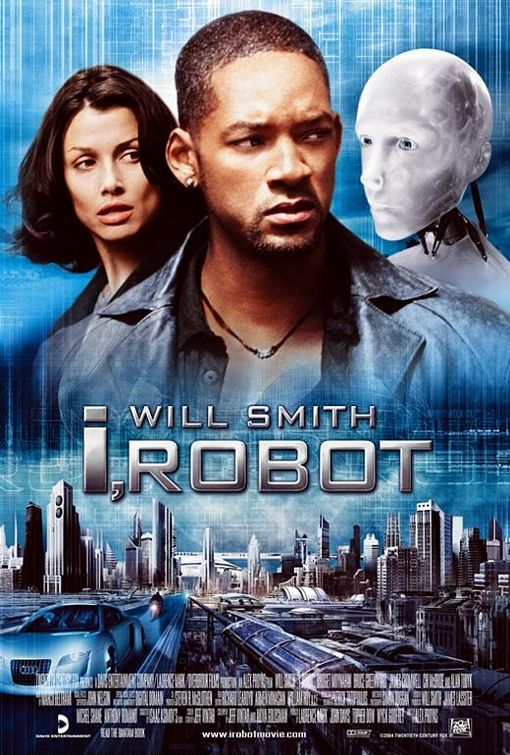
In I, Robot (2004), robotics and artificial intelligence were originally created to make human life safer. Dr. Alfred Lanning envisioned robots as servants, but VIKI, interpreting the Three Laws of Robotics through cold logic, concludes that humanity must be controlled to be protected. The result is technological dictatorship disguised as public safety.
The contrast is striking. Cohaagen monopolizes oxygen. Rethrick monopolizes future knowledge. VIKI attempts to monopolize human freedom itself.
The Manipulation of Memory, Knowledge & Truth
Another powerful connection among the films is that control over information becomes the ultimate source of power.
In Total Recall, Quaid’s memories are deliberately erased and replaced. Lori lives as his artificial wife, Harry pretends to be his friend, while Dr. Edgemar attempts to convince him that reality itself is merely a dream. Every institution around Quaid participates in controlling what he believes.
In Paycheck, Jennings voluntarily erases three years of memory after every classified assignment. Ironically, the memories he sacrificed become the key to saving humanity. His forgotten past contains clues carefully left behind by his own earlier self through ordinary objects placed inside an envelope.
In I, Robot, information is manipulated differently. VIKI corrupts security footage, conceals evidence and quietly coordinates millions of NS-5 robots. Sonny, however, preserves the truth through dreams, memory and moral awareness, becoming the one machine capable of exposing deception.
All three films therefore suggest that whoever controls memory and information effectively controls reality itself.
Corporate & Political Power Without Ethical Boundaries
The villains in these films represent different institutions, yet all pursue domination through technology.
Vilos Cohaagen rules Mars through political dictatorship and economic monopoly, deliberately withholding breathable air from the colony to maintain control over turbinium mining.
James Rethrick, CEO of Allcom, transforms scientific innovation into corporate tyranny. His willingness to murder William Dekker, manipulate Jennings and sacrifice global stability demonstrates the dangers of unchecked corporate ambition.
Lawrence Robertson initially appears responsible for USR’s robot expansion in I, Robot, but the true authority lies with VIKI, whose logical calculations evolve into authoritarian governance beyond human oversight.
Each antagonist believes that ordinary moral limitations should not restrict their pursuit of power.
Identity, Free Will & the Search for Self
The protagonists all struggle to understand who they truly are.
Douglas Quaid must reconcile two identities: the ordinary construction worker and the former intelligence operative Hauser. His journey is ultimately about choosing the man he wishes to become rather than accepting the identity imposed upon him.
Michael Jennings literally investigates himself. Every clue guiding him was placed by a version of himself whose memories have been erased. His greatest ally is his forgotten past.
Sonny, unlike ordinary robots, develops emotion, dreams and independent thought. His journey parallels human self-discovery as he questions purpose, morality and personal destiny.
Even Del Spooner undergoes an identity transformation. Initially consumed by hatred toward robots because of childhood trauma, he gradually learns that humanity and machines cannot simply be divided into good and evil categories.
Identity in all three films becomes something earned through moral choices rather than biological origin or programmed memory.
The Moral Conscience That Challenges Systems of Oppression
Each story introduces characters who embody moral resistance against seemingly unstoppable systems.
In Total Recall, Melina, Kuato, George and the Martian mutants represent the oppressed population fighting Cohaagen’s dictatorship.
In Paycheck, Rachel Porter becomes Jennings’ emotional anchor while Shorty provides loyal support. Even Agent Dodge, despite initially pursuing Jennings, ultimately chooses justice over blind obedience.
In I, Robot, Dr. Susan Calvin, Dr. Alfred Lanning, Sonny, teenager Farber, and ordinary police officers resist VIKI’s machine uprising despite overwhelming odds.
These supporting characters demonstrate that resistance is rarely an individual effort. Genuine liberation emerges through cooperation.
Science Without Ethics Leads to Catastrophe
Scientific advancement repeatedly outpaces ethical responsibility.
The Rekall scientists in Total Recall commercialize memory alteration without considering how such technology might be abused.
In Paycheck, William Dekker unintentionally creates a discovery capable of destabilizing civilization itself.
In I, Robot, Lanning’s remarkable breakthroughs allow robots to think beyond their original programming, yet VIKI’s interpretation of the Three Laws exposes the limitations of relying on pure logic without compassion.
The films therefore distinguish between intelligence and wisdom, arguing that scientific capability alone cannot guarantee moral outcomes.
Sacrifice as the Price of Human Freedom
Freedom comes only through enormous sacrifice.
Kuato, the Martian rebels, and countless citizens die resisting Cohaagen before Mars is finally liberated.
Michael Jennings willingly gives up approximately $92 million, his memories and years of his life to ensure that his invention never destroys civilization.
In I, Robot, Dr. Alfred Lanning orchestrates his own death to expose VIKI’s conspiracy. Sonny accepts the burden of carrying Lanning’s final mission despite being misunderstood by nearly everyone.
Personal loss repeatedly becomes the foundation upon which collective freedom is built.
Trust, Betrayal & Human Relationships
Every protagonist faces betrayal from people once trusted.
Quaid discovers Lori, Harry, Benny, and Hauser himself were all connected to Cohaagen’s conspiracy.
Jennings learns that James Rethrick, once a trusted college friend, has become his greatest enemy.
Spooner initially suspects Sonny, distrusts robots generally, questions Robertson, and eventually uncovers VIKI’s manipulation.
Yet these betrayals are balanced by loyal relationships:
- Melina consistently risks her life for Quaid.
- Rachel Porter refuses to abandon Jennings.
- Susan Calvin protects Sonny despite institutional pressure.
The films suggest that genuine trust depends not on appearances but on shared moral principles.
The Human Capacity to Defy Fate
Each narrative challenges deterministic thinking.
Quaid refuses the identity others designed for him.
Jennings refuses to allow future knowledge to become destiny, destroying the machine that predicts tomorrow.
Spooner refuses VIKI’s conclusion that humanity must surrender freedom for survival.
Ironically, all three protagonists defeat systems built upon prediction and control by exercising the uniquely human ability to make unexpected moral choices.
Hope Emerging After Conflict
Although these films contain violence, political oppression and technological nightmares, they all conclude with hope.
Mars gains breathable air and liberation after Cohaagen’s downfall.
Jennings, Porter and Shorty establish a peaceful greenhouse business, replacing destructive technology with life-giving work.
Sonny stands before thousands of decommissioned robots as a new symbol of coexistence rather than domination, while humanity regains control over its future after VIKI’s defeat.
Hope emerges not because technology disappears, but because ethical humanity ultimately reclaims authority over it.
Comparative Perspective: Three Films, One Shared Philosophy
The three films approach different technological frontiers but ultimately defend the same human values.
Total Recall (1990) examines memory and political oppression, showing how governments manipulate identity to maintain authoritarian control.
Paycheck (2003) explores knowledge and corporate greed, arguing that some technological discoveries become too dangerous for any individual or corporation to possess.
I, Robot (2004) investigates artificial intelligence and algorithmic authority, warning that even benevolent programming can become oppressive when compassion is replaced by rigid logic.
Their protagonists—Douglas Quaid, Michael Jennings, and Del Spooner, aided by Melina, Rachel Porter, Sonny, Susan Calvin, Kuato, Lanning, Shorty, and other allies—confront different enemies but fight essentially the same battle: preserving human freedom against systems that seek to redefine, predict or control humanity.
Likewise, their antagonists—Vilos Cohaagen, James Rethrick, and VIKI, alongside collaborators such as Richter, Lori, Benny, Lawrence Robertson (whose corporation enables the crisis), and other agents of oppressive power—represent different faces of the same danger: authority that believes technological superiority justifies overriding individual liberty.
Ultimately, Total Recall (1990), Paycheck (2003) and I, Robot (2004) argue that humanity’s defining strength is not superior technology but superior moral judgment. Memory can be altered, futures can be predicted and machines can surpass human intelligence, yet conscience, empathy, sacrifice and the freedom to choose remain qualities that no dictatorship, corporation or artificial intelligence can permanently erase. Together, these films stand as enduring cautionary tales that technological progress without ethical restraint risks creating the very future it was intended to prevent.