
Jet A1 Price Surge Hits Airlines Hard, United Nigeria Reports ₦10 Billion Setback
Rising Fuel Costs Shake Airline Operations
UNITED Nigeria Airlines has disclosed that it suffered losses estimated at ₦10 billion within a three-month period as soaring aviation fuel prices and global supply disruptions intensified pressure on Nigeria’s airline industry.
The airline’s Executive Chairman, Professor Obiora Okonkwo, attributed the losses largely to the sharp increase in Jet A1 prices following tensions in the Middle East and disruptions linked to the Strait of Hormuz, one of the world’s most critical energy transit routes.
According to industry figures, aviation fuel prices surged dramatically in recent months, rising from about ₦900 per litre to as high as ₦3,300 per litre, representing one of the steepest increases experienced by domestic operators in recent years.
Industry Faces Mounting Financial Pressure
Speaking during the unveiling of newly acquired aircraft by the airline, Okonkwo said the rising cost of operations has placed unprecedented strain on carriers already grappling with foreign exchange challenges, maintenance costs and infrastructure deficits.
He explained that although passenger traffic fluctuates seasonally, the impact of fuel price increases over the last three months has been particularly severe.
According to him, airlines have been forced to absorb significant operational costs while attempting to maintain service schedules and avoid excessive fare increases that could further burden passengers.
Industry observers note that fuel accounts for a substantial percentage of airline operating expenses, making carriers especially vulnerable to global oil market disruptions.
New Aircraft Signal Expansion Plans
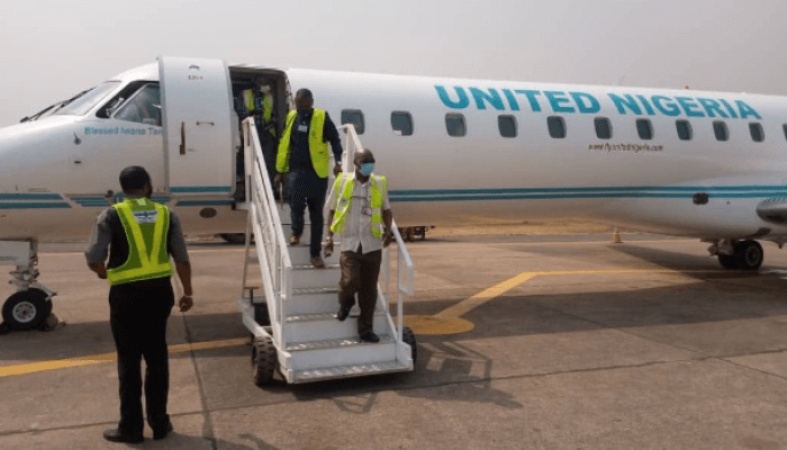
Despite the financial setbacks, United Nigeria Airlines used the occasion to celebrate the addition of new aircraft to its fleet.
The airline named the aircraft after two prominent Nigerian figures — the Obi of Onitsha, Igwe Nnaemeka Achebe, and the late literary icon, Chinua Achebe — in recognition of their contributions to culture, leadership and national development.
Okonkwo described the acquisitions as evidence of the airline’s commitment to long-term growth despite prevailing economic challenges.
He recalled the lengthy process involved in acquiring and certifying the aircraft, praising aviation regulators for accelerating approvals and reducing bureaucratic delays.
Call for Policy Reforms
The airline chairman also called for reforms aimed at reducing the cost of doing business in Nigeria’s aviation sector.
He argued that excessive deductions from aviation agencies under the Treasury Single Account (TSA) framework have limited the ability of agencies such as the Nigerian Civil Aviation Authority (NCAA) and the Federal Airports Authority of Nigeria (FAAN) to improve infrastructure and service delivery.
Okonkwo urged the government to allow aviation revenues to remain within the sector for reinvestment, while also considering single-digit financing options for domestic airlines.
As the industry navigates rising operating costs and global economic uncertainty, stakeholders say policy support, infrastructure investment and fuel market stability will be critical to ensuring the sustainability of Nigeria’s aviation sector.
