
Heavyweights, Newcomers Intensify Battle For Nigeria’s Presidency
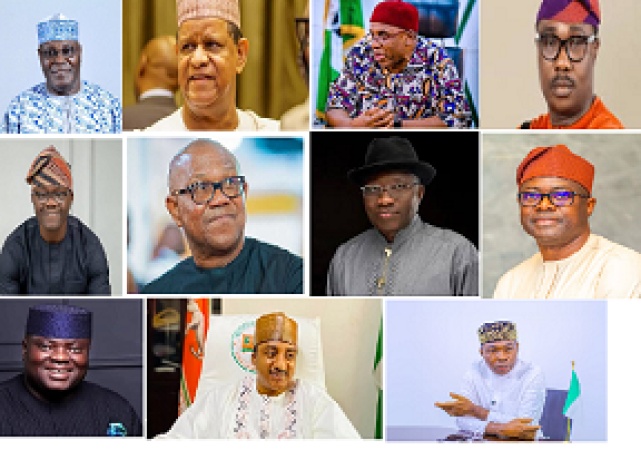
Tinubu Confronts Expanding Opposition Field Ahead of 2027 Polls
Presidential Race Gradually Takes Shape
WITH less than eight months to Nigeria’s scheduled 16th January 2027 presidential election, the emerging political landscape is beginning to reveal the major actors, alliances and strategic calculations likely to shape the contest for the nation’s highest office.
Across the country’s leading political parties, established political heavyweights, former office holders, technocrats and first-time contenders are positioning themselves for what analysts predict could become one of Nigeria’s most competitive presidential elections since 1999.
Although President Bola Ahmed Tinubu remains firmly in control of the ruling All Progressives Congress structure, opposition parties and coalition blocs are intensifying efforts to build momentum capable of challenging the incumbent administration amid economic hardship, inflationary pressure and growing public dissatisfaction.
Current projections indicate that at least 13 aspirants have openly shown interest in the race across major political platforms, including the African Democratic Congress, Labour Party, Peoples Democratic Party, Social Democratic Party and the Nigeria Democratic Congress.
APC Banks on Incumbency and Structure
Within the APC, President Bola Ahmed Tinubu remains the dominant political figure despite the emergence of businessman Stanley Osifo as another aspirant on the party’s platform.
Party leaders have repeatedly endorsed Tinubu for a second term, relying heavily on incumbency advantage, federal political structures and ongoing infrastructure projects as key pillars of the president’s re-election strategy.
However, analysts note that worsening economic conditions, insecurity and public frustration over the rising cost of living could become critical factors capable of reshaping the political equation ahead of 2027.
Atiku, Obi and Jonathan Return to the Centre Stage
Among opposition figures, former Vice President Atiku Abubakar remains one of the most prominent contenders.
Now aligned with the ADC coalition, Atiku is preparing for what could become his seventh presidential attempt since the 1990s. Supporters describe him as one of the few opposition politicians with nationwide networks, financial capacity and long-standing political structures.
Former President Goodluck Jonathan has also re-emerged within national political calculations despite legal debates surrounding his eligibility following constitutional amendments concerning multiple terms in office.
Jonathan’s supporters argue that his experience, moderate political image and perceived statesmanship may attract voters seeking stability amid current national challenges.
Former Anambra State Governor Peter Obi continues to command strong support among urban youths and sections of Nigeria’s middle class.
Now associated with the NDC coalition, Obi’s political strength remains particularly visible among younger voters who view him as a reform-minded alternative to the traditional political establishment.
Technocrats and Emerging Contenders Join Contest
Beyond the major political figures, several lesser-known aspirants are attempting to redefine the presidential conversation through technocratic, youth-focused and reform-driven campaigns.
Economist Mohammed Hayatu-Deen is positioning himself within the ADC as a technocratic alternative centred on economic restructuring, institutional reform and fiscal stability.
Within the Labour Party, aspirants Peter Agada and Samuel Nwaigwe are campaigning on governance reforms, security restructuring, youth mobilisation and economic revival.
Former Minister of Transportation Rotimi Amaechi is also considered a major figure within opposition coalition discussions, particularly because of his influence across northern political blocs and his extensive network within Nigeria’s political establishment.
Meanwhile, Oyo State Governor Seyi Makinde has emerged as another possible consensus figure within sections of the opposition following his growing national visibility and financial influence.
Coalition Politics May Define Outcome
Political analysts believe the 2027 presidential race may ultimately revolve around coalition-building, regional calculations and the ability of opposition parties to unite behind a single formidable candidate.
The opposition’s greatest challenge, observers argue, may not simply be defeating Tinubu, but overcoming internal fragmentation, competing ambitions and ideological divisions.
Despite mounting criticism of the current administration, analysts warn that a divided opposition could ultimately strengthen the APC’s position ahead of the election.
As parties continue consultations, primaries and legal battles over electoral timelines, the months ahead are expected to witness further defections, strategic alliances and political negotiations capable of significantly reshaping the presidential contest.
