
From California Ballots To Alaska’s Senate Race: Courts Challenge Trump Administration’s Election Interventions
By ANDERSON CLIFF
Trump’s Midterm Power Struggle: Courts, States & Voters Push Back Against Presidential Overreach
AS Americans head into a consequential midterm election, President Donald Trump’s administration faces mounting legal challenges over its approach to election administration, federal authority and the use of public institutions. From attempts to set aside disputed ballots in California to a lawsuit seeking to delay certification of Alaska’s Senate election, recent court decisions have placed important limits on the administration’s demands. Meanwhile, Washington, DC, and Virginia have taken legal action against Trump’s proposed triumphal arch, adding another front to the growing contest over presidential power and the authority of local governments.
The disputes differ in their legal foundations and immediate consequences. Nevertheless, they share a wider question: how far can a president and his administration go in pursuing political priorities before encountering constitutional safeguards, statutory limits and the independence of other institutions?
The controversy has become particularly significant as voters prepare to decide control of Congress in the 3rd November 2026 midterm elections. At stake are not only the balance of power between Republicans and Democrats but also public confidence in electoral procedures, the independence of state election authorities and the ability of courts to review executive action.

Courts Challenge Federal Attempts to Intervene in State Elections
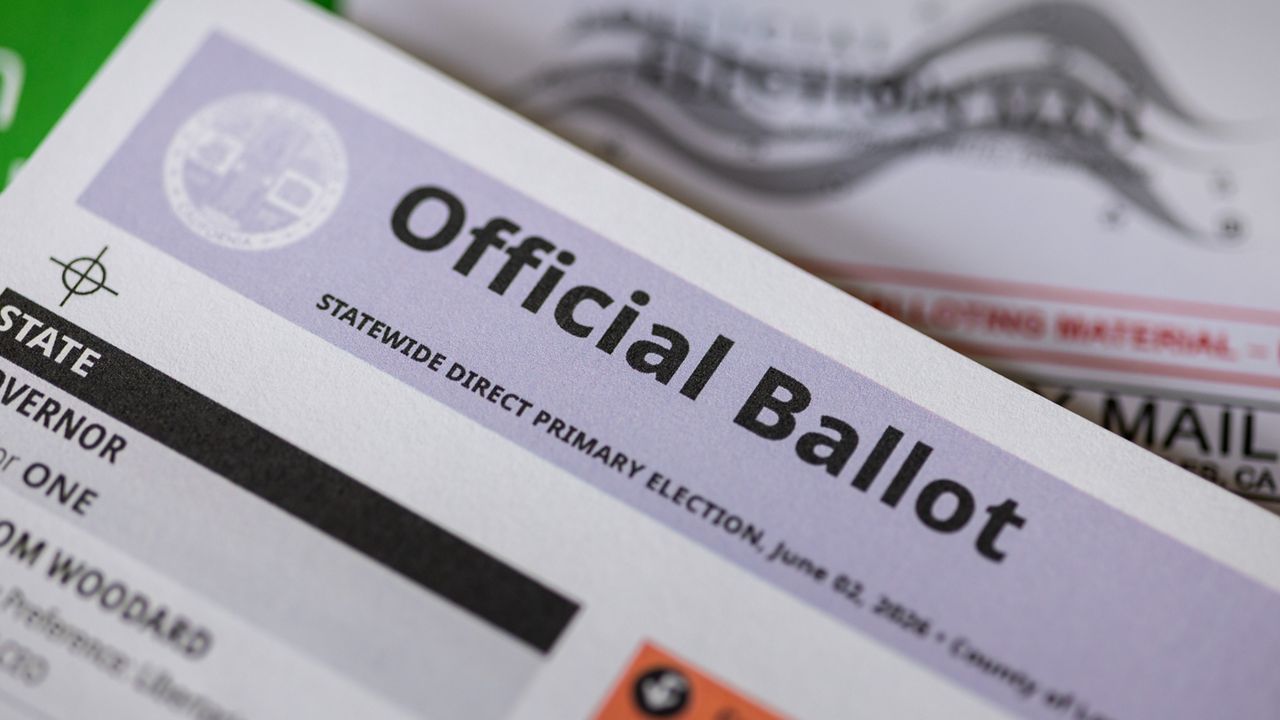
One of the most consequential disputes concerns the Justice Department’s attempt to require California election officials to separate ballots associated with people the federal government identified as possible noncitizens.
The department compiled a list of 20,930 names and demanded that state officials treat the individuals as potential ineligible voters. Its position was that ballots associated with those names should be set aside rather than included in the ordinary counting process.
However, an analysis submitted in a legal filing by two UCLA data scientists raised serious questions about the reliability of the list. According to their findings, 8,880 names, representing more than 42 per cent of the total, could not be matched to anyone in California’s voter records.
Furthermore, the researchers identified at least 22 US citizens on the list and concluded that nearly 7,500 naturalised citizens were highly likely to have been wrongly flagged.
The findings, submitted in litigation involving immigrant-rights organisations, challenged the reliability of the data underpinning the federal government’s demands. They also raised concerns about the potential consequences of acting on inaccurate information, particularly where eligible voters could have their ballots delayed, separated or subjected to unnecessary scrutiny.
Although the Justice Department disputes the analysis, the controversy highlights the difficulties associated with using imperfect databases to make decisions that could affect fundamental voting rights.
Importantly, a name appearing on a government list does not, by itself, establish that the individual is a noncitizen or has unlawfully registered to vote. Election authorities must establish eligibility through legally appropriate procedures rather than rely exclusively on uncertain data matches.
Supreme Court Rejects Last-Minute California Ballot Request
The legal dispute escalated when Trump’s administration approached the Supreme Court with an emergency request seeking to compel California to set aside potentially thousands of ballots associated with the flagged names.
The timing was particularly sensitive because the appeal arrived on 2 November, only hours before Election Day. By then, millions of Americans had already participated in early voting, while election officials were processing mail-in ballots.
Nevertheless, the Supreme Court rejected the administration’s request within hours of receiving it. The justices issued a brief, unsigned order denying the emergency relief. No dissent was recorded, and the court did not provide an explanation.
The decision followed setbacks in lower courts, including a ruling by the Ninth US Circuit Court of Appeals that rejected the administration’s attempt to intervene in California’s mail-ballot counting process.
Consequently, the federal government failed to secure the emergency order it wanted before the election.
However, the Supreme Court’s brief decision should not be interpreted as a comprehensive ruling on every aspect of voter eligibility or the possibility of noncitizen registration. Rather, it rejected the specific emergency request before it, leaving the administration without the authority it sought to compel California to segregate the disputed ballots.
The case nevertheless illustrates the importance of judicial scrutiny when executive demands could affect the handling of votes. Even when a government agency raises legitimate questions about election administration, its proposed remedies must comply with the law and respect the rights of eligible voters.
Alaska Senate Lawsuit Collapses Over Ballot Secrecy & Legal Standing
A similar confrontation unfolded in Alaska, where the Justice Department attempted to prevent the state from certifying its Senate election results if Republican incumbent Senator Dan Sullivan lost.
The controversy centred on the presence of another candidate, Daniel J. Sullivan, whose name and party affiliation the department argued could confuse voters. The government alleged that the candidate’s participation could divert votes intended for the incumbent and potentially affect the outcome of the race against Democrat Mary Peltola.
On that basis, the Justice Department asked a federal court to require Alaska officials to segregate ballots cast for Daniel J. Sullivan and delay certification if the Republican senator lost by a margin smaller than the votes received by the similarly named candidate.
However, US District Judge Sharon Gleason dismissed the lawsuit on 1 November. She concluded that the federal government lacked the legal standing required to obtain the relief it sought.
More significantly, the judge questioned how election officials could separate the disputed ballots and investigate voters’ intentions without compromising ballot secrecy.
In her ruling, Gleason said the Justice Department had failed to provide a workable plan for conducting such an investigation while preserving voters’ right to cast secret ballots.
She also considered the timing of the request, observing that the courts could not reasonably impose such a substantial change to election procedures on the eve of voting.
The Justice Department subsequently filed an appeal. Nevertheless, the dismissal represented another judicial setback for the administration’s efforts to intervene in state election arrangements.
The dispute also exposed the difficulty of translating allegations of voter confusion into a legally workable remedy. Even if election authorities identify a potential problem, any intervention must respect the secrecy of individual votes and the procedures established by state law.
Washington & Virginia Challenge Trump’s Proposed Triumphal Arch
While the election disputes unfolded across California and Alaska, Trump’s proposed triumphal arch near Arlington National Cemetery generated another significant legal confrontation.
The proposed 250-foot monument, which the president has promoted as part of the country’s 250th-anniversary celebrations, would stand near the Potomac River, close to the Arlington Memorial Bridge and the historic corridor connecting the Lincoln Memorial with Arlington National Cemetery.
The project has attracted opposition from Vietnam War veterans, an architectural historian, preservation advocates and other groups concerned about its effect on the surrounding landscape.
The legal pressure intensified on 31 October when Washington, DC, and Virginia filed a joint lawsuit seeking to stop construction. Their action joined an earlier challenge brought by three Vietnam War veterans and an architectural historian.
The two jurisdictions argued that the project could cause serious disruption to the region and raised questions about congressional authorisation, environmental reviews, historic preservation requirements and public safety.
They also warned that construction could alter traffic patterns for several years, complicate emergency evacuations and interfere with emergency services. In addition, they raised concerns about pollution, stormwater runoff and possible effects on air safety.
The proposed structure is considerably larger than an ordinary commemorative monument. Federal plans describe a building more than 12 storeys high, with a winged Lady Liberty statue, an observation deck, offices, elevators and other facilities.
Trump’s administration has defended the project and indicated that construction could begin as early as 5 November, subject to the necessary approvals. It has also presented the structure as a tourist attraction and suggested that it could serve certain military-related purposes.
However, US District Judge Tanya Chutkan questioned the administration’s urgency during a hearing on 30 October. She asked why construction could not wait several months and examined the government’s arguments concerning the project’s purpose, funding and potential consequences.
Following the new lawsuit by Washington and Virginia, Chutkan consolidated the cases and established a joint briefing process. She also imposed strict notification requirements on the administration, directing officials to inform her promptly about relevant decisions and any activity connected with preparing for construction.
The dispute therefore extends beyond the appearance of a monument. It raises questions about the legal authority to alter a nationally significant landscape and the extent to which local governments can challenge federal projects that they believe threaten residents, infrastructure and public safety.
A Broader Contest Over the Limits of Presidential Authority
Taken together, the election lawsuits and the arch controversy reveal the extent to which the Trump administration’s decisions have encountered resistance from courts and other levels of government.
In California, the Justice Department sought to influence how state officials handled ballots associated with people it suspected might not be citizens. In Alaska, it attempted to secure an order that could have delayed certification of a Senate election. Meanwhile, Washington and Virginia challenged a major federal construction project over questions involving authorisation, environmental protection and local interests.
These cases do not establish that every administration initiative is unlawful. Nor do the judicial decisions resolve every underlying political or administrative disagreement. Instead, they demonstrate that executive authority remains subject to legal scrutiny, particularly when federal action intersects with state responsibilities, individual rights and established approval procedures.
The distinction matters because the United States operates a federal system in which states administer their elections under applicable federal and state laws. Federal agencies have responsibilities in protecting voting rights and enforcing election-related legislation, but those responsibilities do not automatically give them unlimited power to dictate how states count ballots or certify results.
Similarly, the president’s authority to propose national projects does not remove the need to comply with statutory requirements, environmental procedures and other applicable legal obligations.
Epstein Files Promise Adds Another Political Dimension
Beyond the courtroom disputes, Trump’s reported statement about releasing the Epstein files introduces a separate question concerning political transparency and the use of public commitments during an election campaign.
According to the headline supplied for this report, Trump said he would release all the files in two weeks if Republicans retained control of both the House of Representatives and the Senate.
The reported condition makes the statement politically significant because it links a promise involving public records to the electoral fortunes of the president’s party.
However, the exact statement and its full context require independent confirmation. It is therefore important not to treat the reported promise as proof that a complete release will occur or that every document can lawfully be published without redactions.
The Epstein files have remained a subject of intense public interest. In November 2025, Congress passed the Epstein Files Transparency Act, and Trump signed it into law. The legislation required the Justice Department to release specified unclassified records within 30 days, while permitting certain redactions to protect victims, sensitive information and qualifying investigations.
That earlier legislative requirement provides important context, but it does not independently verify the new conditional statement attributed to Trump.
Ultimately, public access to records involving serious crimes and powerful individuals should depend on legal obligations, transparency requirements and appropriate victim protections rather than partisan electoral calculations.
Midterm Elections Put Democratic Institutions Under Pressure
The 3rd November midterms provide the immediate political backdrop to these developments. Voters are deciding which party will control Congress, while several closely watched contests could influence the direction of federal policy and the administration’s relationship with the legislature.
The election disputes have consequently raised concerns about the protection of ballots, the authority of election officials and the importance of allowing voters to participate without unnecessary interference.
At the same time, the legal challenges demonstrate why independent courts matter in a constitutional system. Judges are expected to examine the legal basis for government action, consider the rights affected and determine whether the requested remedies fall within the law.
Nevertheless, judicial intervention alone cannot guarantee public confidence. Election officials must maintain accurate records, political parties must respect established procedures, and government agencies must present credible evidence before seeking measures that could affect voting rights.
The Institutional Test Beyond Election Day
The developments surrounding California, Alaska, Washington and the Epstein files point to a broader challenge facing American democracy: maintaining a balance between executive authority, electoral integrity, transparency and the rights of citizens.
The administration has the right to pursue its policy objectives and raise concerns about election administration. However, those efforts must operate within legal boundaries and rely on evidence capable of supporting the action requested.
Likewise, courts must examine disputes independently, while state and local authorities must exercise their responsibilities consistently with applicable law.
Ultimately, the significance of these cases extends beyond whether Trump secures approval for a monument or whether Republicans retain control of Congress. They concern the rules governing how power is exercised and the safeguards available when government decisions threaten to exceed those rules.
The midterm election will determine the immediate political balance in Washington. Yet the deeper test will continue after the ballots are counted: whether public institutions can preserve their independence, protect individual rights and ensure that political authority remains accountable to the law.
