
Fourth Strike In Days: US Military Escalates Deadly Operations At Sea
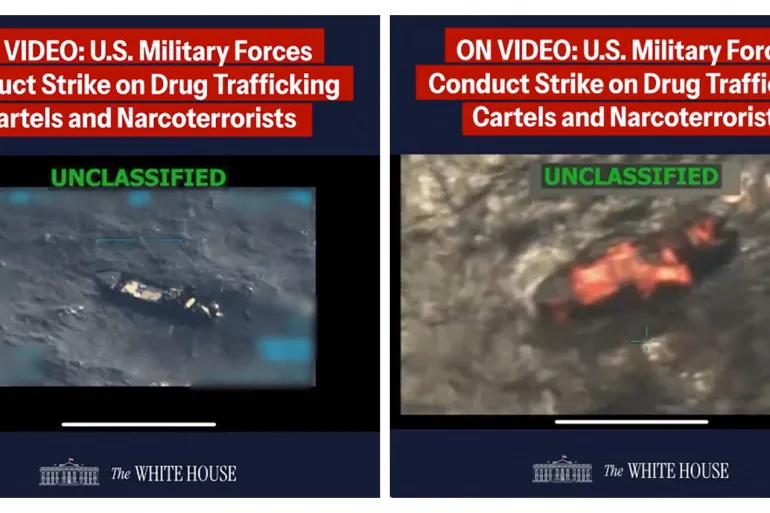
Deadly Strike in Eastern Pacific
THE United States military has carried out another lethal strike on a vessel in the eastern Pacific Ocean, killing four people in what officials describe as part of an ongoing crackdown on drug trafficking networks.
According to the U.S. Southern Command, the targeted vessel was believed to be operating along known narcotics trafficking routes. The operation marks the latest in a series of rapid strikes in the region, highlighting an intensification of Washington’s maritime anti-drug campaign.
Part of a Broader Military Campaign
The latest incident is not isolated. It represents at least the fourth such strike within a matter of days, reflecting a significant escalation in operations targeting suspected drug-smuggling vessels.
Since the campaign began months ago, dozens of similar strikes have been carried out, with cumulative fatalities reportedly exceeding 170.
U.S. officials have justified the operations as necessary to disrupt transnational criminal networks responsible for narcotics trafficking, particularly drugs linked to overdose crises in the United States.
Controversy Over Evidence and Legality
Despite official assurances, the strikes have sparked growing criticism from legal experts and human rights organisations.
Critics argue that the U.S. has not publicly provided sufficient evidence to substantiate claims that those targeted were involved in drug trafficking or linked to designated terrorist organisations.
There are also concerns about the legal basis for using military force in what is traditionally considered a law enforcement domain. Experts point out that drug trafficking does not constitute an armed conflict under international law, raising questions about whether such strikes amount to extrajudicial killings.
Civilian Risk and Human Rights Concerns
Reports of possible civilian casualties have further intensified scrutiny.
Some advocacy groups claim that individuals aboard targeted vessels may include fishermen or other non-combatants, calling for independent investigations into the strikes.
Lawyers and civil society organisations have already initiated legal challenges, arguing that the operations violate both domestic and international legal standards.
Strategic Shift in Drug Enforcement
The use of military force against suspected drug traffickers signals a notable shift in U.S. strategy.
Traditionally, anti-narcotics operations have relied on law enforcement agencies, intelligence gathering, and international cooperation. However, the current approach reflects a more aggressive posture, blending military tactics with counter-narcotics objectives.
Supporters argue that such measures are necessary to address the scale and sophistication of modern drug networks. Critics, however, warn that militarisation may create new risks without addressing underlying issues in the global drug trade.
Rising Tensions and Uncertain Outcomes
The continued strikes raise broader questions about their effectiveness and long-term implications.
While the operations may disrupt specific trafficking routes, analysts caution that drug networks are highly adaptable and may quickly shift to alternative pathways.
At the same time, the growing controversy surrounding the strikes could lead to increased diplomatic and legal challenges for the United States.
A Campaign Under Scrutiny
As the U.S. expands its maritime operations in the eastern Pacific, the balance between security objectives and legal accountability remains under intense scrutiny.
The latest strike, while consistent with the administration’s strategy, underscores the complexities of using military force in non-traditional conflict settings.
Whether the campaign achieves its intended goals—or deepens existing controversies—will likely depend on how these concerns are addressed in the months ahead.
