
The King Who Became Disposable: Was Tommen’s Death The Final Step In Cersei’s Seizure Of Absolute Power?
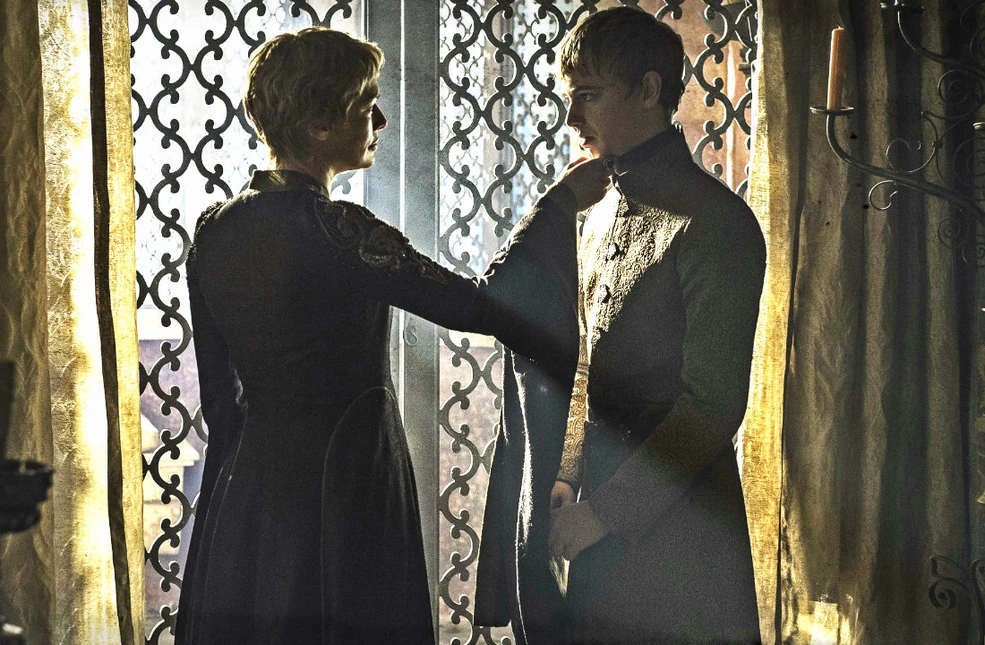
The Death of a King and the Birth of an Autocrat
ONE of the most debated moments in the classical movie series Game of Thrones is the death of Tommen Baratheon.
On the surface, it appears to be a tragedy.
A young king, devastated by the destruction of the Great Sept of Baelor and the death of his wife, quietly walks to a window and ends his own life by falling through that window.
The event is presented as the final casualty of a political catastrophe.
Yet a closer examination raises a disturbing question:
Was Tommen’s death merely an unforeseen consequence of Cersei’s actions, or had she already accepted—and perhaps even anticipated—the possibility that her son would become expendable?
The answer reveals less about motherhood and more about power.
Cersei’s Two Different Griefs
To understand the political significance of Tommen’s death, it is important to compare it with the death of his older brother, Joffrey Baratheon.
When Joffrey died, Cersei Lannister appeared emotionally shattered.
Her grief was raw, uncontrolled, and public.
She accused enemies.
She demanded vengeance.
She destabilized the political atmosphere of King’s Landing through sheer emotional force.
The reaction felt genuine because it was.
Joffrey was not merely a son.
He was the extension of Cersei’s ambitions.
He reflected her worldview, her ruthlessness, and her desire for control.
The Different Response to Tommen
When Tommen died, the response was remarkably different.
There was shock.
But there was no emotional collapse.
No public breakdown.
No obsessive search for culprits.
Instead, Cersei moved almost immediately toward governance.
Funeral arrangements were handled efficiently.
Political transition occurred rapidly.
The machinery of state continued without interruption.
This contrast is politically revealing.
It suggests that Tommen’s death, unlike Joffrey’s, did not fundamentally disrupt Cersei’s plans.

The Problem with Puppet Rulers
Tommen represented a challenge that many authoritarian figures throughout history have encountered.
He was originally useful because he was pliable.
Young.
Dependent.
Influenceable.
As long as Tommen followed instructions, he served as the perfect political instrument.
The crown rested on his head.
But power remained elsewhere.
When the Puppet Develops Independence
The problem emerged when Tommen began developing independent judgment.
Influenced by the Faith of the Seven and his wife, Margaery Tyrell, he gradually drifted away from Cersei’s direct control.
For the first time, he began making decisions that did not originate from her.
This transformation fundamentally altered his political value.
Authoritarian systems often tolerate individuals only while they remain useful.
The moment independent thinking emerges, former allies can become obstacles.
Nigeria: When Power Outgrows Its Creators
This phenomenon has parallels within Nigerian political history.
Political godfathers frequently sponsor younger politicians, expecting loyalty and obedience.
The arrangement functions smoothly until the protégé begins exercising independent authority.
At that point, relationships often deteriorate.
What was once mentorship becomes rivalry.
What was once support becomes hostility.
The conflict is rarely about policy.
It is about control.
Tommen’s evolution from obedient son to independent king mirrors this broader political pattern.
Africa’s Politics of Controlled Leadership
Across Africa, similar dynamics have appeared repeatedly.
Leaders sometimes elevate successors believing they can continue influencing events from behind the scenes.
However, power changes people.
Once authority becomes institutionalized, successors often seek autonomy.
This creates tension between the old center of power and the new officeholder.
History repeatedly demonstrates that individuals who are expected to remain symbolic figures often develop ambitions of their own.
The resulting struggle can destabilize entire political systems.
The Destruction of the Great Sept
The destruction of the Great Sept of Baelor represents one of the most consequential political acts in Westerosi history.
Cersei did not merely eliminate rivals.
She destroyed an entire alternative power structure.
Within a single act, she removed:
- the High Sparrow,
- the Faith Militant,
- the Tyrell leadership,
- political opposition,
- and religious oversight.
This was not revenge.
It was regime restructuring.
A Classic Authoritarian Move
Throughout global history, rulers seeking absolute authority have often targeted institutions capable of limiting their power.
These include:
- religious organizations,
- courts,
- legislatures,
- political opposition,
- and independent civic structures.
The objective is not simply victory.
The objective is eliminating competing centers of legitimacy.
After the Sept exploded, there was effectively no institution left powerful enough to challenge Cersei inside King’s Landing.
Did Cersei Anticipate Tommen’s Death?
There is no direct evidence in the series that Cersei explicitly planned Tommen’s suicide.
However, there is strong evidence that she prioritized power above the emotional risks involved.
She knew Tommen loved Margaery.
She understood his connection to the Faith.
She understood the psychological consequences of destroying both.
Yet she proceeded anyway.
This suggests something politically significant:
Tommen’s survival was no longer her highest priority.
Victory was.
Global Politics: The Cost of Absolute Power
History repeatedly shows that leaders pursuing total control often become willing to accept losses that would once have been unimaginable.
Relationships become secondary.
Institutions become disposable.
Alliances become temporary.
The pursuit of power gradually eclipses every other consideration.
Cersei’s actions reflect this progression.
She does not necessarily engineer Tommen’s death.
But she knowingly creates the conditions that make it possible.
The Coronation That Revealed Everything
Perhaps the most telling moment comes after the funeral.
Cersei does not retreat from politics.
She does not enter prolonged mourning.
She does not question her actions.
Instead, she places the crown upon her own head.
The transition appears seamless.
Almost inevitable.
The kingdom moves directly from Tommen’s death to Cersei’s reign.
The symbolism is profound.
The mother disappears.
The monarch remains.
Nigeria, Africa and the World: The Eternal Lesson
From Nigeria to Africa and across the global political landscape, the story of Tommen and Cersei illustrates a recurring truth about power.
Leaders often begin by controlling systems.
Over time, controlling systems becomes more important than protecting people.
The distinction is subtle but dangerous.
Once power becomes the ultimate objective, even family, loyalty, and emotional bonds can become secondary considerations.
Final Reflection
The death of Tommen Baratheon may not have been a conspiracy carefully scripted from the beginning.
But it was certainly the consequence of a political strategy that valued power above every other consideration.
Cersei did not need to push her son from the window.
She only needed to create a world in which his survival no longer mattered to her ambitions.
And that may be the most unsettling lesson of all.
The most dangerous leaders are not always those who directly destroy people.
Sometimes they are those who become so consumed by power that they no longer care what is destroyed along the way.
