
Poison, Power & Betrayal: Ten Deadly Schemes That Changed The Course Of ‘Game Of Thrones’

The Invisible Weapon Behind the Wars of Westeros
IN the famous classical movie series Game of Thrones, the sword is the most visible instrument of power, but poison is arguably the more politically consequential weapon. Swords settle disputes in public. Poison operates in private. A sword announces the presence of an enemy, while poison allows an assassin to hide behind friendship, family loyalty, hospitality, romance and even an apparent act of reconciliation.
Across the series, ten poisoning incidents reveal how political actors exploit trust to eliminate opponents, manipulate succession, destabilise governments, settle family grievances and redirect the course of history. Some succeed because their perpetrators remain invisible. Others fail because an intended victim recognises the danger, an unexpected intervention disrupts the plot, or the target refuses to consume the poisoned substance.
More importantly, these incidents are not isolated acts of murder. They form a connected history of political intrigue in which the consequences of one assassination frequently create the conditions for another. The poisoning of Jon Arryn helps ignite the conflict that destroys the Stark family. The attempted poisoning of Daenerys Targaryen changes Khal Drogo’s ambitions and indirectly contributes to the emergence of her dragons. Joffrey’s murder sends Tyrion into a trial that ends in Oberyn Martell’s death, while Oberyn’s poisoned spear produces an outcome that transforms Gregor Clegane into Cersei Lannister’s terrifying personal weapon.
Elsewhere, the poisoning of Myrcella Baratheon deepens the conflict between Dorne and King’s Landing. Arya Stark turns the language of hospitality into an instrument of mass revenge against House Frey. Cersei subsequently reproduces Ellaria Sand’s method of assassination to punish her, while Olenna Tyrell uses her final moments to disclose her responsibility for Joffrey’s death. Finally, Varys attempts to use poison against Daenerys, but his plan fails before it could be completed.
Taken together, these events expose a recurring feature of political life in Westeros: those who understand the power of information, deception and timing can sometimes achieve what armies cannot. Yet the same history demonstrates that covert violence rarely remains confined to its intended target. It creates new enemies, destabilises alliances and generates consequences that its architects cannot always control.
The pattern is particularly relevant to Nigerian, African and global political analysis. Across different societies, political assassinations, covert operations, intelligence networks, elite rivalries and the manipulation of public trust have influenced the rise and fall of governments. Although modern constitutional states differ fundamentally from the feudal world of Westeros, the political mechanisms of deception, patronage, revenge and the struggle for succession remain recognisable.

1. Jon Arryn: The Poison That Started the War of the Five Kings
The first poisoning in the series is also one of the most politically consequential because the victim never appears alive in the opening episode. Jon Arryn, the former Hand of the King, has already died when the story begins. His death is officially attributed to an illness, and the apparent naturalness of his passing initially prevents the court from treating it as a murder investigation.
However, the circumstances surrounding his death conceal a much more elaborate conspiracy. Jon Arryn was poisoned with the Tears of Lys, a rare and expensive substance known for being clear, tasteless and difficult to detect. Its properties made it particularly suitable for an assassination designed to resemble a natural illness.
The person who administered the poison was his wife, Lysa Arryn. Yet she was not the architect of the conspiracy. Petyr Baelish, popularly known as Littlefinger, supplied the poison and persuaded Lysa to put it into her husband’s wine.
This distinction is crucial. Littlefinger understood that an assassination did not require the mastermind to be physically present. He could manipulate someone who had intimate access to the intended victim, allowing the actual perpetrator to appear emotionally and politically removed from the crime.
Lysa’s involvement was particularly useful because she occupied a position of trust within Jon’s household. She was his wife, the person least likely to attract immediate suspicion. Meanwhile, Littlefinger maintained his public position as a helpful court official while concealing his involvement in the murder.
The conspiracy extended beyond the poisoning itself. Littlefinger encouraged Lysa to write to her sister, Catelyn Stark, accusing the Lannisters of killing Jon Arryn. That letter helped redirect suspicion towards the most powerful family in King’s Landing and contributed to the political crisis that followed.
Ned Stark’s investigation, Catelyn’s seizure of Tyrion Lannister and the subsequent escalation of hostilities all emerged within this environment of manufactured suspicion. The resulting conflict eventually claimed Ned’s life, destroyed Robb Stark’s campaign and produced the devastating political realignment known as the War of the Five Kings.
The importance of Jon Arryn’s poisoning therefore extends far beyond the death of one nobleman. It demonstrates how a carefully concealed assassination can become the foundation of a much larger political operation.
Littlefinger did not need to defeat the Starks or Lannisters in open battle. He needed only to create an atmosphere of distrust in which their competing ambitions would push them towards confrontation.
His eventual exposure at Winterfell completes the circle. Sansa Stark identifies his role in Lysa’s murder and the wider conspiracy, turning the crime that helped Littlefinger advance into one of the charges that destroys him.
The Nigerian and African political implications are particularly relevant here. Political crises do not always begin with visible confrontations. Sometimes they emerge from misinformation, manipulated intelligence, false accusations and the deliberate creation of suspicion between rival institutions or political actors.
In societies where public confidence in institutions is already fragile, an unverified allegation can produce consequences far beyond its original target. It can undermine trust, deepen political divisions and create opportunities for individuals who benefit from instability.
Littlefinger’s greatest achievement was not the technical effectiveness of the poison. It was his understanding that the political consequences of an assassination could be more valuable than the death itself.
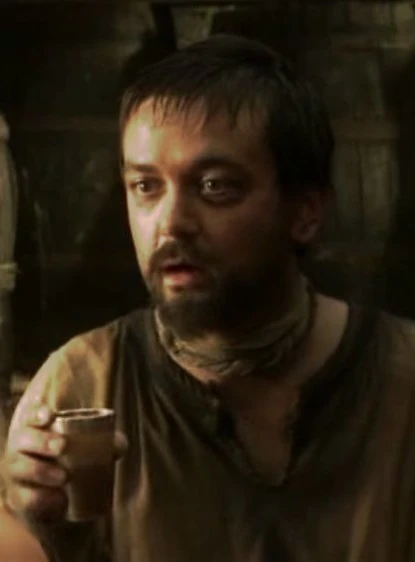


2. The Attempted Poisoning of Daenerys: When an Assassination Plot Creates a New War
The second incident demonstrates the opposite of Littlefinger’s success. Here, an assassination attempt fails because someone recognises the danger before the intended victim consumes the poison.
After Robert Baratheon learns that Daenerys Targaryen is pregnant, he becomes increasingly determined to eliminate her. He fears that the birth of a Targaryen heir could eventually provide a rallying point for those seeking to overthrow his dynasty.
Ned Stark opposes the proposed assassination and resigns as Hand rather than support the killing of a pregnant woman. Nevertheless, the royal court proceeds with the attempt through a wine merchant who approaches Daenerys at Vaes Dothrak.
The merchant offers her wine from the Arbor, exploiting her emotional connection to the homeland she has never known. The gesture appears harmless, even generous. However, the wine is intended to kill her.
Ser Jorah Mormont intervenes before she can drink it. Having received a royal pardon, he understands that the political authorities no longer require his intelligence reports because they have moved towards a more direct method of eliminating Daenerys. He recognises the danger, orders the merchant to drink the wine and helps expose the assassination attempt.
The consequences are extraordinary.
Until then, Khal Drogo has shown little interest in crossing the Narrow Sea to claim the Iron Throne. The attempted murder of his pregnant wife changes his attitude. He vows to conquer Westeros and secure the throne for their unborn child.
That decision leads to a chain of events that eventually contributes to his death, Daenerys’s entry into the funeral pyre and the birth of her three dragons.
The failed poisoning therefore becomes more consequential than several successful assassinations. It transforms Drogo’s political ambitions and helps shape Daenerys’s future identity as a claimant to the Iron Throne.
There is also a deeper irony in Jorah’s involvement. He saves Daenerys from the immediate danger, but he had previously been spying on her for Robert’s government. His reports helped the royal court understand her movements and pregnancy, making him part of the intelligence network that facilitated the attempted assassination.
When Daenerys eventually discovers his betrayal, she struggles to reconcile his earlier actions with the loyalty he has subsequently demonstrated. She banishes him, forcing him to confront the consequences of having served two opposing political interests.
This episode exposes the ethical ambiguity of intelligence work. Spies frequently justify their actions as necessary for national security, political stability or personal survival. Yet the information they collect can be used for purposes that conflict with their later loyalties.
Modern states face similar questions about surveillance, intelligence sharing and the accountability of security institutions. Intelligence gathering may protect national interests, but it can also facilitate unlawful targeting, political repression or the abuse of vulnerable individuals.
The attempted poisoning of Daenerys also illustrates an important principle of political risk: an action intended to eliminate a threat can instead strengthen the very movement it seeks to destroy.
Robert’s government attempts to prevent a future Targaryen challenge. Instead, it helps provoke Drogo’s determination to invade Westeros.
The lesson is that political assassination is not a reliable substitute for strategic judgment. Eliminating an opponent may remove one immediate problem while creating a much larger and less predictable conflict.
3. Maester Cressen: The Poison That Failed Against Faith & Supernatural Power
The third incident takes place on Dragonstone, where Maester Cressen watches the growing influence of Melisandre over Stannis Baratheon.
Cressen has served the Baratheon household for many years. He understands Stannis’s character and believes the Red Woman’s religious influence is drawing the king away from the traditions and political relationships that once defined his household.
His attempts to reason with Stannis have failed. Consequently, he decides that eliminating Melisandre may be the only way to prevent what he considers a dangerous transformation of the kingdom.
He prepares a poisoned cup of wine and approaches Melisandre under the appearance of reconciliation. Davos Seaworth notices what he is doing and quietly urges him to stop. Cressen refuses.
He drinks from the poisoned cup first, demonstrating that he is willing to sacrifice himself to ensure that Melisandre also consumes the substance. However, the poison affects him almost immediately, producing bleeding and severe physical distress.
Melisandre drinks the remaining wine without suffering the same consequences. Her ruby glows as she declares that the fires of the Lord of Light protect her. Cressen collapses and dies.
The incident is important because it reveals the limits of conventional political calculation in a world where supernatural forces influence events. Cressen believes he has identified a practical solution to a political and religious problem. Yet he fails to understand the nature of the power he is confronting.
The poisoning also produces a psychological consequence. The assembled court witnesses Melisandre survive an attempted assassination that kills an experienced maester. Her apparent immunity strengthens her authority and makes open resistance to her influence more difficult.
However, the scene should not be reduced to the claim that Melisandre’s later revelation of her true age completely explains her survival. The series connects her apparent immunity to her supernatural powers and the glowing ruby, but it does not provide a detailed scientific explanation of the poison’s failure.
The political significance is more important than the precise mechanism. Cressen’s death removes a traditional adviser from Stannis’s immediate environment and leaves Melisandre with greater influence.
This reflects a wider institutional problem: when political leaders become dependent on a single adviser, religious authority or ideological interpreter, competing sources of counsel can gradually disappear.
The danger is not necessarily religion itself. Religious belief can provide moral guidance, social solidarity and a framework for public responsibility. The danger arises when political authority becomes insulated from scrutiny because a leader or adviser claims access to unquestionable truth.
In Nigeria and other African societies, the relationship between religious authority and political power remains an important subject of public debate. Religious leaders can contribute positively to public life by promoting accountability, peace and social responsibility. However, the use of spiritual authority to discourage scrutiny or legitimise political decisions can weaken democratic accountability.
Cressen’s failure demonstrates that sincere intentions and personal sacrifice do not guarantee sound political judgment. His decision is driven by fear, but he acts without fully understanding the power he intends to confront.
His death also establishes a recurring theme in the series: political actors who believe they are protecting a kingdom can become casualties of the very struggles they seek to control.

4. Joffrey Baratheon: The Purple Wedding & the Politics of Manufactured Guilt
Joffrey’s death at the Purple Wedding is perhaps the most famous poisoning in Game of Thrones. It is also one of the clearest demonstrations of how an assassination can be designed to produce a political outcome beyond the death of its immediate target.
The conspiracy involves Petyr Baelish and Olenna Tyrell. Littlefinger arranges for poison to be concealed in a crystal attached to Sansa Stark’s hairnet. Ser Dontos Hollard delivers the hairnet to Sansa, who wears it to the wedding without knowing that it contains the murder weapon.
During the celebrations, Olenna approaches Sansa and appears to adjust her hair. In reality, she removes the poisoned crystal and later uses it to contaminate Joffrey’s wine.
The poison is identified during Tyrion’s trial as the Strangler. It causes the victim’s throat muscles to contract, producing the horrifying appearance of suffocation. Joffrey begins choking, his face turns purple and he dies in front of the assembled nobility.
The immediate political consequence is the arrest and prosecution of Tyrion Lannister. Joffrey had publicly humiliated him during the wedding feast, and the circumstances allow Cersei to present him as the obvious suspect.
Sansa also disappears from King’s Landing, making her vulnerable to suspicion. Yet she is not a participant in the murder. She has unknowingly carried the object used to facilitate it.
The conspiracy is particularly revealing because Littlefinger once again relies on intermediaries. He supplies the instrument, allows another person to carry it and ensures that the blame can fall on someone else.
Olenna, meanwhile, has her own motive. She wants to prevent her granddaughter Margaery from becoming the wife of a dangerously cruel king. By eliminating Joffrey, she creates the possibility of Margaery marrying his younger brother, Tommen.
The assassination therefore serves two overlapping political objectives: Littlefinger’s wider strategy of destabilisation and Olenna’s determination to protect her granddaughter.
The comparison with Jon Arryn’s murder is striking. In both cases, Littlefinger uses a trusted intermediary and an innocent or unsuspecting person to conceal the operation. In both cases, the consequences extend far beyond the victim.
The Purple Wedding also exposes the weakness of Westeros’s judicial institutions. Tyrion is accused in a political atmosphere already shaped by hostility, fear and family rivalry. The court does not approach the case as an impartial investigation. Instead, it becomes an extension of the struggle for power.
This has clear implications for modern societies. When criminal investigations become instruments of political competition, the distinction between evidence and accusation begins to collapse. Individuals may be prosecuted because they are unpopular, politically inconvenient or associated with an opposing faction.
The presumption of innocence, independent investigation and judicial impartiality are essential precisely because public anger and political pressure can distort the search for truth.
Joffrey’s murder may remove a tyrannical king, but the subsequent prosecution of Tyrion demonstrates that the death of a dangerous ruler does not automatically produce a fairer political order.
5. Oberyn Martell: Manticore Venom & the Transformation of Revenge into a Weapon
The fifth incident is unusual because the poison is not delivered through food or drink. It is applied to a weapon and used during a public trial by combat.
Oberyn Martell enters the arena as Tyrion’s champion, but his principal objective is personal revenge. He wants Gregor Clegane, the Mountain, to confess to the rape and murder of his sister, Elia Martell, and the killing of her children during the Sack of King’s Landing.
Oberyn’s spear is coated with manticore venom. He fights with speed and precision, repeatedly wounding Gregor while avoiding a direct confrontation with the larger and physically stronger opponent.
His strategy is not simply to kill the Mountain. He wants a public confession.
Eventually, Gregor admits his responsibility for the crimes before crushing Oberyn’s skull. Oberyn loses the trial by combat, and Tyrion is sentenced to death. Nevertheless, the poison continues working inside Gregor’s body.
His wounds deteriorate, his blood darkens and his physical condition becomes increasingly horrific. Qyburn eventually identifies the poison as manticore venom that has been altered to prolong the victim’s suffering.
This is one of the most significant examples of unintended political consequences in the series.
Oberyn intends to punish Gregor for the destruction of his family. Instead, his poison creates the circumstances through which Qyburn transforms the dying warrior into Ser Robert Strong, Cersei’s silent and terrifying protector.
The man who killed Elia Martell and her children becomes an instrument of power for the very dynasty Oberyn despises.
The irony is devastating. Revenge intended to destroy an enemy ends up strengthening the enemy’s political machinery.
This development also raises questions about the relationship between scientific knowledge, ethics and political power. Qyburn’s intervention is not motivated by public welfare or medical responsibility. He uses his knowledge to serve Cersei’s interests, turning a dying man into a weapon.
The transformation illustrates the danger of technical expertise operating without ethical restraint or independent oversight.
In modern societies, scientific and technological capabilities can be used for public benefit or political coercion. Medical knowledge, surveillance technologies, military research and artificial intelligence can improve human welfare, but they can also strengthen authoritarian systems when deployed without accountability.
Oberyn’s story further demonstrates the danger of allowing unresolved historical grievances to dominate political decision-making. His pursuit of justice is understandable, but his desire for a public confession causes him to prolong the fight when he has already gained a decisive advantage.
He is so determined to make Gregor acknowledge his crimes that he loses the opportunity to secure his own survival.
The tragedy is not that Oberyn seeks accountability. It is that he allows the desire for personal vindication to override the practical objective of defeating his opponent.
6. Myrcella Baratheon: The Long Farewell & the Collapse of Political Reconciliation
The sixth poisoning emerges from the conflict between House Martell and House Lannister.
Ellaria Sand wants revenge for Oberyn’s death. However, Prince Doran Martell refuses to pursue a war against King’s Landing, preferring to preserve Dorne’s political position through restraint and negotiation.
Ellaria rejects his approach and decides to strike at the Lannisters independently.
Her target is Myrcella Baratheon, the young princess living in Dorne. Although Myrcella is politically connected to the Lannisters, she is also a child who has no direct responsibility for Oberyn’s death.
Ellaria arranges to poison her through a kiss. The substance is the Long Farewell, a slow-acting poison from Asshai. It can enter the body through skin contact, and its effects may take hours or days depending on the victim’s constitution.
The series establishes its lethality earlier when Tyene Sand uses it on Bronn through a poisoned dagger. She later provides him with the antidote.

As Jaime and Myrcella prepare to leave Dorne, Ellaria approaches the princess and kisses her goodbye. The gesture initially appears affectionate and conciliatory.
On the ship, Myrcella finally tells Jaime that she knows he is her father and that she is happy about their relationship. It is a rare moment of emotional reconciliation between them.
However, the poison soon takes effect. Myrcella begins bleeding from the nose and collapses in Jaime’s arms.
Meanwhile, Ellaria develops symptoms of the same poison. Tyene gives her a vial containing the antidote, which she drinks.
The assassination destroys any remaining possibility of reconciliation between Dorne and King’s Landing. Ellaria subsequently removes Doran from power, and Dorne becomes part of Daenerys’s political coalition.
The significance of Myrcella’s death lies in the decision to make an innocent child the instrument of revenge. Ellaria believes that killing a Lannister princess will force the royal family to feel the pain she associates with Oberyn’s death.
Yet the murder does not restore Oberyn or deliver justice for Elia. Instead, it produces another cycle of retaliation.
This is a recurring problem in societies affected by historical violence. When political grievances remain unresolved, successive generations may inherit anger and treat revenge as a legitimate obligation. Communities can become trapped in cycles where each new act of violence is presented as compensation for an earlier one.
Across Africa and other parts of the world, conflicts involving ethnic identity, land, political exclusion, religious divisions and historical grievances have sometimes persisted because political leaders have failed to create credible mechanisms for reconciliation and accountability.
The answer cannot be to dismiss historical injuries. Victims deserve recognition, truth and justice. However, justice requires more than transferring suffering from one family or community to another.
Ellaria’s decision demonstrates the destructive consequences of confusing revenge with justice. She kills a child who cannot answer for Oberyn’s death and thereby makes future reconciliation far more difficult.
7. Arya Stark & House Frey: The Red Wedding Avenged Through Poisoned Hospitality
Arya Stark’s destruction of the Frey men is one of the most striking acts of revenge in the series.
The Red Wedding had already established the Freys as perpetrators of one of Westeros’s most shocking betrayals. Under the protection of guest right, Robb Stark, Catelyn Stark and their supporters had entered the Twins expecting hospitality. Instead, Walder Frey and his allies arranged their massacre.
The violation was not merely military. It was a betrayal of a social and moral institution that was supposed to protect guests from violence under their host’s roof.
Arya’s revenge begins with Walder Frey himself. She kills him and uses his face to impersonate him. At the beginning of Season 7, she summons the male members of House Frey to a feast.
The men are served wine presented as Arbor Gold. They drink without suspicion because they believe the host is Walder Frey.
Arya then reminds them of their role in the Red Wedding. She recounts the murder of a pregnant woman and the killing of a mother and her children. As the men begin to choke and collapse, she reveals her identity and leaves the surviving women with a message: the North remembers, and winter has come for House Frey. The precise poison used in the feast is not identified in the series.
This incident is significant for several reasons.
First, Arya turns the Freys’ own methods against them. They used hospitality to conceal mass murder; she uses hospitality to conceal mass revenge.
Second, she targets the male members of the house while sparing the women, making the massacre both a calculated political act and a symbolic punishment of the family responsible for the Red Wedding.
Third, the incident marks a significant development in Arya’s character. She has moved from being a young girl who witnessed the destruction of her family to someone capable of planning and executing a large-scale act of revenge.
Yet the episode also raises difficult ethical questions. The Freys who participated in the massacre bear responsibility for their actions, but the destruction of an entire group through collective punishment risks reproducing the very logic of indiscriminate violence that made the Red Wedding so horrifying.
This is where the scene becomes relevant to political and social conflicts beyond Westeros.
Collective punishment has repeatedly appeared in the history of warfare and political repression. Individuals may be targeted because of their family, community, ethnicity or association with a particular organisation, rather than because of their independently established responsibility.
Such practices undermine the principle of individual accountability. They also create new grievances that can sustain future conflict.
Arya’s action is emotionally understandable within the context of her family’s suffering. However, its political meaning is more complicated. She has destroyed the leadership of House Frey, but the method is not a judicial process. It is an act of personal vengeance carried out through deception and mass killing.
The scene also demonstrates how symbols can become instruments of political authority. By invoking the North’s memory, Arya transforms the massacre into a public warning. Her message is intended to deter future betrayals, but it also establishes her as someone willing to use terror to enforce political consequences.
The distinction between deterrence and justice remains unresolved.
8. Cersei Lannister: The Long Farewell Reproduced as an Instrument of Psychological Torture
Cersei’s response to Myrcella’s death reveals how revenge can become a political inheritance.
After Euron Greyjoy captures Ellaria Sand and Tyene, he delivers them to Cersei as a gift. Cersei could execute them quickly, but she chooses a punishment designed to reproduce the emotional suffering she experienced after losing Myrcella.

She chains Ellaria and Tyene in the black cells, positioning them so that Ellaria must watch her daughter.
Cersei then kisses Tyene with poisoned lips. The substance is the same Long Farewell that Ellaria used against Myrcella. Qyburn has identified the poison and acquired the antidote, allowing Cersei to survive while Tyene is left to die.
Cersei deliberately preserves Ellaria’s life so that she can witness her daughter’s deterioration. She orders the guards to maintain the torches, ensuring that Ellaria will not miss the spectacle.
The method is chilling because it transforms assassination into psychological torture.
Cersei does not merely want Ellaria dead. She wants her to experience the same helplessness that accompanied Myrcella’s death.
The poison therefore becomes a means of controlling time, suffering and memory. Cersei determines not only who will die but also who must remain alive to witness the death.
This episode demonstrates the difference between punishment and cruelty. A legitimate justice system may impose punishment after a fair process, but Cersei’s decision is entirely personal. She acts as accuser, judge and executioner.
Her conduct also exposes the danger of retaliatory politics. Instead of ending the conflict, she reproduces the original method of violence and intensifies the suffering of another family.
In contemporary political analysis, this resembles cycles of reprisal in which each side justifies its actions as a response to an earlier injury. Such cycles can make compromise appear dishonourable and reconciliation politically impossible.
Nigeria’s experience of communal and political violence, like that of several African societies, demonstrates the importance of distinguishing individual responsibility from collective blame. Where retaliation becomes the dominant response to violence, innocent people can become targets simply because they belong to the opposing group.
The lesson is not that victims should abandon the pursuit of justice. Rather, accountability must be anchored in institutions and procedures capable of preventing revenge from becoming an alternative system of governance.
Cersei’s punishment of Ellaria is not justice. It is the use of state power to satisfy personal hatred.
9. Olenna Tyrell: A Painless Death & the Most Devastating Confession
Olenna’s poisoning is among the most psychologically sophisticated incidents in the series because the intended victim knowingly accepts the substance.
After the Lannister army captures Highgarden, Jaime visits Olenna and informs her that Cersei had considered several brutal methods of execution. He then offers her a quicker and supposedly painless death through poison.
Olenna accepts the cup and drinks without hesitation.
Her response is remarkable because she recognises that she has lost the military and political struggle. Nevertheless, she retains control over the final conversation.
She returns to Joffrey’s death, describing the choking, the bleeding and the horrifying physical consequences of the poison. Jaime listens as she recalls the circumstances of his son’s final moments.
Then she reveals that she was responsible for arranging the assassination.
Her final instruction is direct: “Tell Cersei. I want her to know it was me.”
The confession is devastating because Jaime has just shown her mercy. He has protected her from the more brutal execution methods his sister considered. Yet Olenna has waited until the poison has taken effect before revealing the truth.
The poison supplied by Jaime gives her the opportunity to die on her own terms. The confession ensures that her death will also carry a final political message.
It is important to distinguish Olenna’s responsibility from the wider conspiracy. Petyr Baelish helped arrange the scheme, and the poison was concealed in Sansa Stark’s hairnet. Olenna was the person who removed the poisoned crystal and placed it in Joffrey’s wine.
Her confession therefore confirms her direct participation in the murder, but it does not make her the sole architect of the entire operation.
Olenna’s final act is a demonstration of psychological power. She understands Jaime’s emotional attachment to Cersei and knows that he will carry the information back to her.
She also understands that the revelation will destroy the remaining possibility of concealing Joffrey’s true killer from the Lannisters.
Yet her victory is limited. House Tyrell has been defeated, Highgarden has fallen and her family has suffered catastrophic losses. Her confession cannot restore what has been destroyed.
What she achieves is control over the final meaning of her defeat.
This has an important connection to political communication and historical memory. Individuals and institutions may lose office, wealth or military power but still retain the ability to shape how events are remembered. The final account of a political crisis can influence the reputations of its participants long after the immediate struggle has ended.
Olenna understands that the timing of information can be as consequential as the information itself.
Her death is therefore not simply an act of revenge. It is a final attempt to control the historical narrative of House Tyrell’s destruction.

10. Varys: The Failed Poisoning Plot Against Daenerys
The final incident is different from the others because the series does not explicitly show the poison being administered or Daenerys consuming it.
After losing Rhaegal and Missandei, Varys becomes increasingly convinced that Daenerys is no longer fit to rule. He fears that her grief and anger are turning her into another version of her father, the Mad King.
Varys has already discussed the possibility that Jon Snow would make a better ruler. He attempts to persuade Tyrion to support a change of allegiance, but Tyrion refuses to join the conspiracy.
Varys nevertheless continues his efforts through one of his young informants, Martha, who works in the kitchens at Dragonstone.
Martha tells him that Daenerys has refused to eat. Varys responds that they will try again at supper. When the girl mentions that soldiers are watching her, Varys reminds her that greater risks bring greater rewards.
The exchange strongly suggests an attempt to poison Daenerys through her food. However, the series leaves the actual administration of the poison unseen. The plot fails because Daenerys does not eat, and Tyrion subsequently informs her of Varys’s betrayal.
Varys is arrested and executed by dragonfire.
The episode is especially revealing because it brings together the themes of intelligence, political legitimacy and the limits of covert action.
Varys believes that he is acting in the interests of the realm. His long-standing political philosophy is that the welfare of ordinary people should take precedence over the ambitions of individual rulers.

However, his proposed solution is itself an act of political assassination. He seeks to remove Daenerys without a public process or constitutional mechanism, relying instead on the secret network that has defined his career.
This creates a contradiction between his stated commitment to the common good and his willingness to determine the future of the kingdom through covert violence.
The episode also raises a fundamental question: who has the authority to decide that a ruler is no longer fit to govern?
In a constitutional democracy, the answer should not depend on the private judgment of a single adviser. Political accountability must operate through established legal and institutional mechanisms. Leaders can be challenged, investigated, impeached or removed according to constitutional procedures.
Varys’s dilemma reflects the weakness of Westeros’s political order. There is no dependable institution capable of managing a succession crisis or holding a ruler accountable without resorting to conspiracy, rebellion or assassination.
His failure is therefore not simply the result of Daenerys refusing food. It exposes the fragility of a political system in which even an experienced intelligence operator believes that the removal of a ruler must be organised secretly.
There is also a final irony. Varys wants to prevent Daenerys from destroying King’s Landing, but his failure to remove her leaves her in power. She subsequently burns much of the city during the final conflict.
The attempted poisoning does not establish that Varys could have prevented the destruction. It does, however, underline the danger of political systems that lack credible, peaceful mechanisms for replacing leaders who pose a threat to public welfare.
The Common Pattern: Poison Works Best When Trust Becomes Its Delivery System
When these ten incidents are examined together, a consistent pattern emerges. The poison itself is rarely the most important element. The decisive factor is the relationship between the perpetrator and the intended victim.
Jon Arryn’s poison comes through his wife, whose position gives her intimate access to him. Littlefinger’s involvement remains concealed behind the appearance of ordinary court service.
Daenerys’s attempted poisoning arrives as a gift of wine from a stranger who appears to be offering hospitality. Cressen disguises his attempt as an act of religious reconciliation.
Joffrey’s poison enters the wedding through Sansa’s hairnet, an object she believes is harmless. Oberyn conceals his poison on a spear, turning a public contest into a delayed assassination.
Myrcella’s poison arrives through a kiss that appears affectionate. Arya uses the trust the Freys place in their supposed patriarch to deliver poisoned wine. Cersei reproduces Ellaria’s method through another kiss, while Jaime presents Olenna’s poison as an act of mercy.
Varys’s proposed method also depends on access to the queen’s food through a trusted kitchen worker.
In every case, the perpetrator exploits an ordinary relationship or social ritual to conceal a dangerous intention.
This is the central political insight of the series: trust is both a social necessity and a potential vulnerability.
Families depend on trust. Governments depend on trust. Diplomatic relationships, commercial transactions, public institutions and political alliances all require some degree of confidence between participants.
Yet trust becomes dangerous when it is exploited without accountability.
The same principle applies to political misinformation, corruption, intelligence manipulation and covert influence. A false report can be more damaging when it comes from a trusted official than when it comes from an obvious adversary. A corrupt arrangement can remain concealed when its participants occupy positions that appear legitimate. A political conspiracy can advance because those involved understand how to make their actions look like routine institutional activity.
Poison, in this sense, becomes a metaphor for the corruption of relationships and institutions.
Nigerian & African Political Lessons: Intelligence, Trust & the Abuse of Institutions
The poisoning episodes offer several important lessons for Nigerian and African political systems.
The first concerns the dangers of personalised power. Littlefinger’s operations succeed because he manipulates individuals rather than relying on institutions. He exploits Lysa’s emotional dependence, uses Sansa without her knowledge and allows the political consequences of his actions to unfold beyond his immediate control.
A similar danger emerges when public institutions become excessively dependent on the personal relationships of powerful individuals. Where political appointments, public contracts, security decisions and administrative priorities depend primarily on private loyalty, institutional independence becomes difficult to sustain.
The second lesson concerns the role of intelligence services. Varys and Littlefinger demonstrate how information can shape political outcomes. Their networks provide access to private conversations, movements, intentions and vulnerabilities.
In modern states, intelligence institutions are essential for national security, counterterrorism, public safety and the protection of constitutional order. However, their authority must be governed by law, legislative oversight and judicial accountability.
Without these safeguards, intelligence gathering can become political surveillance, intimidation or a tool for eliminating opponents.
The third lesson concerns the relationship between political grievance and violence. Ellaria’s murder of Myrcella and Cersei’s retaliatory poisoning of Tyene demonstrate how personal revenge can become embedded in wider political conflict.
African societies have repeatedly faced the consequences of unresolved historical grievances, communal violence and cycles of reprisal. Sustainable peace requires credible investigations, accountability, reconciliation and institutions that protect people regardless of their political, ethnic or religious identity.
The fourth lesson concerns political succession. Several poisonings in the series are connected to the struggle over who should rule. Jon Arryn’s death destabilises the monarchy, Joffrey’s murder changes the succession, and Varys’s final conspiracy emerges from disagreement over Daenerys’s fitness to govern.
This demonstrates why succession arrangements cannot depend exclusively on personal loyalty, military strength or private conspiracies. Stable political systems need clear constitutional rules and credible procedures for resolving disputes over leadership.
For Nigeria, the broader point is the importance of constitutionalism, independent institutions, transparent political competition and the peaceful transfer of power. The legitimacy of government cannot rest solely on the personality of the officeholder or the strength of the political network surrounding that person.
Global Perspective: Assassination, Political Stability & the Limits of Covert Power
The global relevance of these stories lies in their examination of the relationship between assassination and political change.
History contains numerous examples of rulers, military commanders and political figures being removed through covert violence. Such operations may alter the immediate balance of power, but they rarely guarantee the political outcome their architects desire.
The removal of a leader can create a succession crisis, strengthen rival factions, trigger civil conflict or produce a government even less accountable than the one it replaces.
The central weakness of assassination as a political instrument is that it treats leadership as the only source of political instability. Yet political crises frequently emerge from deeper institutional problems: unequal access to power, weak accountability, exclusion, corruption, economic insecurity and the absence of credible dispute-resolution mechanisms.
Removing one individual cannot automatically resolve these structural weaknesses.
This is particularly evident in the story of Jon Arryn. His death does not merely remove a Hand of the King. It becomes the opening move in a conspiracy that destabilises the entire political system.
Similarly, the attempt to eliminate Daenerys does not end the Targaryen threat. It helps strengthen her determination to pursue the throne.
Oberyn’s poisoned spear does not restore justice to Elia Martell. It produces the circumstances for Gregor’s transformation into Cersei’s weapon.
Ellaria’s poisoning of Myrcella does not repair the political relationship between Dorne and the Lannisters. It deepens the conflict.
The series therefore offers a consistent warning: covert violence may achieve an immediate objective, but its wider consequences remain difficult to control.
The Final Verdict: The Most Dangerous Poison Is the Corruption of Trust
The ten poisoning incidents in Game of Thrones demonstrate that political violence is not always loud, visible or immediate. Sometimes it arrives through a familiar face, a trusted messenger, a marriage arrangement, a cup of wine or an apparently affectionate gesture.
The perpetrators who succeed most effectively understand that the victim’s confidence can be more valuable than the poison itself. They exploit personal relationships, institutional weaknesses and political assumptions to conceal their intentions.
Littlefinger uses emotional dependence and misinformation to destabilise rival families. Olenna uses timing and personal knowledge to secure a final act of revenge. Ellaria turns affection into an instrument of murder, while Cersei reproduces the same method to inflict psychological suffering. Arya transforms the Freys’ violation of hospitality into an occasion for collective retaliation. Varys, meanwhile, demonstrates the contradictions of an intelligence operator who claims to serve the public interest but ultimately turns to assassination when institutional alternatives appear unavailable.
The most important distinction among these incidents is not simply which poison succeeds or fails. It is what each attempt reveals about the political environment in which it occurs.
Some assassinations succeed because institutions are too weak to detect or prevent them. Others fail because personal intervention disrupts the conspiracy. Still others produce consequences that their perpetrators could never have anticipated.
Ultimately, the history of poison in Westeros is a history of political distrust. Families suspect one another, advisers manipulate their rulers, allies conceal their intentions, and political institutions repeatedly fail to provide peaceful mechanisms for resolving disputes.
That is why the lessons extend beyond fantasy.
In Nigeria, across Africa and throughout the wider international system, public confidence remains essential to the legitimacy of government and the stability of political institutions. When trust is systematically abused, the damage reaches far beyond individual victims. It weakens institutions, deepens divisions and creates opportunities for those who benefit from instability.
A sword can kill its victim in a moment. Poison can destroy relationships, institutions and political arrangements long after the person who administered it has disappeared.
In the final analysis, the most dangerous poison in Game of Thrones is not necessarily the substance hidden in a cup or smeared across a blade. It is the corruption of trust that allows the poison to reach its victim in the first place.
