
Nigerians Reject ‘Repentant Terrorists’ Policy, Demand Tougher Counter-Insurgency Measures
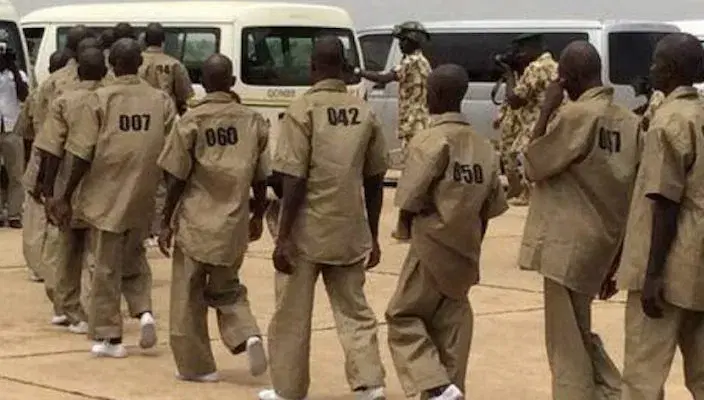
Public Debate Deepens Over Reintegration of Former Fighters
GROWING public concern is trailing the Federal Government’s continued reliance on deradicalisation and reintegration programmes for former insurgents, with many Nigerians insisting that terrorists responsible for years of killings, kidnappings and destruction cannot genuinely abandon extremist ideologies.
The debate has intensified amid renewed insecurity across parts of the country and recent government appeals urging armed groups to surrender and embrace rehabilitation opportunities. President Bola Tinubu recently reiterated that bandits, kidnappers and sponsors of terrorism must surrender or face the full force of the Nigerian state, while warning that opportunities for repentance would not remain open indefinitely.
Yet many citizens remain unconvinced that rehabilitation alone can address the threat posed by violent extremist groups.
Trust Deficit Fuels Public Resistance
For many communities that have endured years of insurgent violence, the concept of “repentant terrorists” remains difficult to accept.
Victims of attacks often question whether individuals who participated in mass killings, abductions, village raids and destruction of livelihoods can genuinely reintegrate into society without posing future security risks.
Critics argue that while deradicalisation may work for some low-level recruits, hardened commanders and ideological extremists may simply exploit the system to evade punishment.
Security analysts note that public distrust is rooted in the painful experiences of communities across the North-East and North-West, where thousands have lost relatives, homes and means of livelihood to insurgent violence over the years.
Government Defends Non-Kinetic Approach
Federal authorities have consistently defended the policy as part of a broader counter-insurgency strategy.
Military leaders have argued that encouraging defections weakens terrorist organisations from within, reduces the number of active fighters and provides valuable intelligence that can support ongoing military operations.
Supporters of the programme contend that not all insurgents joined extremist groups willingly. Some were coerced, abducted or recruited under difficult circumstances and may require rehabilitation rather than indefinite punishment.
Government officials have also maintained that military operations alone cannot permanently end insurgency without complementary social and psychological interventions.
Security Challenges Persist
The controversy comes at a time when security concerns remain a major national issue.
President Tinubu has repeatedly pledged that Nigeria will not surrender to terrorism or banditry and has directed security agencies to intensify operations against criminal groups.
Defence officials have similarly acknowledged that insecurity persists partly because terrorist and bandit groups often receive support, protection or logistical assistance from collaborators within local communities.
However, many Nigerians argue that successful prosecutions, stronger intelligence gathering and more visible justice for victims should accompany any rehabilitation effort.
Balancing Justice and Peace
The debate highlights a difficult dilemma confronting policymakers.
On one hand, deradicalisation programmes are widely used in conflict zones around the world as tools for reducing violence and encouraging defections.
On the other hand, communities affected by terrorism often demand accountability and fear that reintegration without justice may deepen resentment among victims.
As Nigeria continues its search for lasting peace, the controversy over repentant terrorists underscores a larger national question: how to balance reconciliation, justice and security in the fight against violent extremism.
For many citizens, the answer remains clear—they believe genuine repentance must be demonstrated through accountability and sustained proof of transformation rather than mere declarations of surrender.
