
Fresh Peace Push Sees Israel Agree To Partial Lebanon Pullback
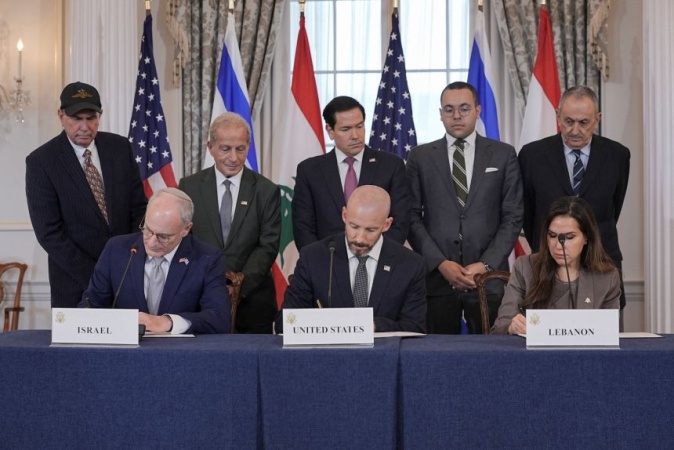
Israel, Lebanon Launch New Diplomatic Phase with US-Brokered Agreement
Partial Military Withdrawal Marks First Step
ISRAEL has agreed to withdraw its troops from two locations in southern Lebanon under a new trilateral agreement involving Lebanon and the United States, opening what all three parties describe as the first phase of a broader diplomatic effort aimed at reducing tensions along one of the Middle East’s most volatile frontiers.
Israeli Prime Minister Benjamin Netanyahu announced that the Israel Defense Forces (IDF) would vacate two positions, including one north of the Litani River and another south of the river. According to him, the sites no longer serve essential military purposes, making the redeployment possible without compromising Israel’s security interests.
The agreement follows four days of negotiations in Washington, where officials from the three countries sought to establish a framework for future talks that could eventually pave the way for a wider peace arrangement.
US Positions Agreement as Confidence-Building Measure
The United States described the accord as an important confidence-building initiative rather than a final settlement of the long-running conflict.
Speaking during the signing ceremony, US Secretary of State Marco Rubio said the agreement represented “the beginning of the beginning,” while cautioning that substantial diplomatic work remained before lasting peace could be achieved.
Lebanon’s Ambassador to the United States, Nada Hamadeh Moawad, described the deal as the first practical step toward restoring Lebanon’s sovereignty and territorial integrity.
Under the arrangement, the Lebanese Armed Forces are expected to deploy into the vacated areas through a pilot programme incorporated into the latest ceasefire framework.
Israel Maintains Security Conditions
Despite the planned withdrawals, Israeli officials stressed that the agreement does not amount to a full military exit from southern Lebanon.
Netanyahu said Israel would continue maintaining positions considered strategically necessary until Hezbollah is fully disarmed, describing the arrangement as beneficial to Israeli security while also reducing regional tensions.
He also argued that the agreement weakens Iranian influence in Lebanon by demonstrating that decisions regarding Israeli-Lebanese security would be determined by the governments involved rather than external actors.
Mixed Reactions Reflect Continuing Divisions
While Lebanese President Joseph Aoun welcomed the agreement and thanked the United States for facilitating negotiations, reactions inside Lebanon remain divided.
Aoun expressed hope that the arrangement would allow citizens to return safely to liberated territories under the full authority of the Lebanese state.
However, Hezbollah rejected both the negotiations and the agreement. Senior Hezbollah lawmaker Hassan Fadallah criticised any direct engagement with Israel and urged the Lebanese government to abandon the process, reflecting the deep political divisions that continue to complicate efforts toward a lasting settlement.
Although the agreement does not resolve decades of conflict between the neighbouring countries, it represents one of the most significant diplomatic engagements between Israel and Lebanon in recent years and could provide momentum for further negotiations if both sides maintain their commitments.
