
Sadat “Turkish Wagner” Military Operations In The Sahel Of Africa
BY DONALD INWALOMHE
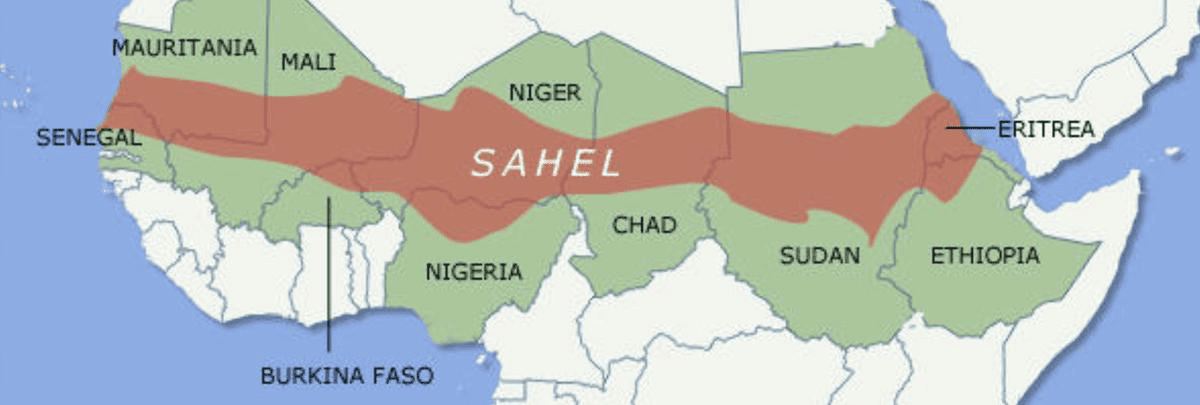
TURKEY’S expanding military influence in Sahel of Africa mirrors Russia’s use of private military companies and resource-driven diplomacy, but unlike Russia, Turkey presents two advantages. Turkey’s political stance allows African states to obtain modern weapons without having to align with major powers. This preserves their national sovereignty, making Turkey the “third way” in the game of the great powers. Secondly, Turkey’s operations are supported by ideological and religious arguments: i.e. Islam, the dominant religion in the Sahel, where Turkey has concentrated its African engagement.
Turkey’s military influence in Africa is rapidly expanding, with approximately 6.000 military personnel deployed in Somalia, Niger, and Libya. This figure is three times the size of France’s regional forces, underscoring the significant scale of Turkey’s operations. At the forefront of this expansion is SADAT (International Defense Consultancy Construction Industry and Trade Inc.; Uluslararası Savunma Danışmanlık İnşaat Sanayi ve Ticaret A.Ş.), a private military company founded in 2012 by former Erdogan military advisor Adnan Tanrıverdi and now led by his son. Turkey is not a party to agreements or codes of conduct seeking to regulate mercenaries.
Often likened to US Triple Canopy or Russia’s actual Afrikansky Korpus, SADAT military operates across Africa, Afghanistan, the Caucasus, and the Balkans, providing training, logistics, and weapons under a military mission to support Muslim countries and protect Turkish minorities. Many of its fighters are recruited from the Syrian National Army (SNA), which has strong ties to the Turkish and US backed Sultan Murad Division (a Syrian Turkmen regiment-sized rebel group).
SADAT International Defense Consultancy, a Turkish private military company, operates as an unofficial arm of Ankara’s foreign and defense policy in Africa. It expands its footprint through military training, security consulting, and the alleged deployment of proxy fighters in regions like the Sahel, Libya, and West Africa. Uluslararası Savunma Danışmanlık Şirketi* (International Defense Consulting Company), known as Sadat, was founded in 2012 by Adnan Tanriverdi, former chief advisor to President Recep Tayyip Erdogan. This PMC is now run by his son Melih Tanriverdi, since the former founder’s death in August 2024. A latecomer to the world of PMCs, Sadat is nonetheless one of the most active in the world. It operates in an area stretching from Libya to Afghanistan, via the Caucasus, the Balkans and, more recently, the Sahel.
SADAT, a Turkish private military contractor, expands its security footprint in the Sahel by providing tactical training, logistics, and personnel support that complement the deployment of Turkish-manufactured armed drones by regional military governments. As detailed in analyses like Turkish military operations in West Africa, the firm operates alongside Ankara’s broader military and diplomatic outreach.
A veritable tool in the service of Turkish foreign and defense policy, it stands out for its operating methods and ideological line. Its existence is openly based on the need to “assist Muslim countries to take their place and play their role in the face of the world’s superpowers”, to protect Turkish minorities scattered across different territories, and to protect Turkey’s civilizational allies.
Since then, the Sahel region, destabilized by endemic terrorism and fragile security policies, has gradually seen a new contingent of Sadat-funded Syrian mercenaries move in, notably in Niger and Burkina Faso, to protect crucial economic sites such as uranium mines and oilfields where the Turkish government has shared interests.
Sadat, regarded by military experts as the “555th regiment of the Syrian army”, has trained members of a new private security force to protect General Assimi Goïta, head of the transitional government in Mali.
Officially, Sadat operates in 22 Muslim countries, offering security audits, operational and logistical support missions, and even the deployment of contract fighters to various entities (governments, militant organizations, etc.). According to the Syrian Observatory for Human Rights (SOHR), Sadat has deployed 1,100 Syrian mercenaries trained in Turkey to Burkina Faso and Niger since September 2023.
International observers also point to a number of abuses, including connivance with terrorist groups close to the Muslim Brotherhood and the supply of arms to jihadist groups, in particular Al Nosra. It is important to remember that Sadat takes his name from the honorary title of the descendants of the Prophet Mohammed.
Sadat’s power also lies in his position as a true salesman for the Turkish Defense Industrial and Technological Base (DITB).Is he not the almost exclusive intermediary for the Bayraktar drones that fly over Mali, Niger and Burkina Faso? In Côte d’Ivoire, Nigeria, Niger, Chad and Guinea, Sadat’s shadow hangs over numerous military cooperation agreements. These breakthrough in Africa has been accentuated since the signing of the Turkey-Niger agreement in July 2020 to establish a Turkish military base in the country.
In addition to assisting the Russians of Africa Corps, Sadat’s mercenaries (a term rejected by Melih Tanriverdi) rely on a sister structure: the Association of Justice Defenders Strategic Studies Center (ASSAM) to influence their environment. Created by Adnan Tanriverdi, ASSAM’s discourse is openly bellicose and anti-Western. ASSAM’s vocation is the creation of Islamic Unity, a political organization whose order is based on the assumption that “Muslims are but brothers, in struggle like Western imperialism and exploitation.” Sadat’s presence in Africa in general, and in the Sahel in particular, is no accident. The PMC did not come to the continent to defend Turkish interests alone.
Founded in 2012 by Adnan Tanrıverdi, a retired Turkish general and former military advisor to President Recep Tayyip Erdoğan. Formed with the stated ideological goal of helping Muslim nations achieve defense cooperation and independence from Western influence. Often referred to by analysts as Turkey’s equivalent to Russia’s Wagner Group or U.S. contractors.
Operations and Presence in Africa
The Sahel and West Africa: Documented and reported deployments involve hundreds of Turkish-backed Syrian mercenaries sent to secure economic infrastructure, critical sites, and military positions in countries like Niger and Burkina Faso. Broader Footprint: Analysts and regional monitors have flagged a shadow presence or training cooperation linked to SADAT extending into Libya, Mali, Nigeria, Togo, and Guinea. State Links: Operations frequently overlap with formal Turkish defense cooperation agreements and the booming export of Turkish-made armed drones to African militaries.
Inwalomhe Donald writes via inwalomhe.donald@yahoo.com
