
“I Don’t See the Hunger”: Onanuga Defends Tinubu’s Reform Agenda
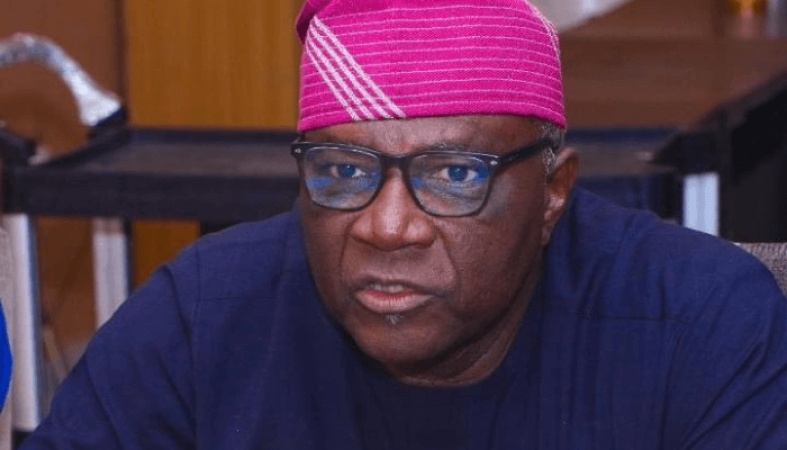
Presidential Aide Counters Economic Gloom Narrative
PRESIDENTIAL spokesman, Bayo Onanuga, has challenged prevailing claims of widespread hunger across Nigeria, arguing that millions of citizens are already benefiting from economic and social intervention programmes introduced by the administration of Bola Ahmed Tinubu.
Speaking during an interview with ARISE News, Onanuga maintained that while economic difficulties remain a reality for many Nigerians, public conversations often overlook the impact of ongoing government projects and reforms.
His remarks come amid continuing national debate over the effects of major economic decisions, including fuel subsidy removal and foreign exchange market reforms, policies that have generated both praise and criticism since their introduction.
Infrastructure Projects Presented as Evidence of Progress
Defending the administration’s performance, Onanuga cited recent improvements in transportation infrastructure as visible examples of government intervention.
He recounted a personal experience while travelling between Ibadan and Lagos, describing how he unexpectedly encountered a newly completed concrete road after diverting from a congested route.
According to him, such projects demonstrate that public investments are gradually improving connectivity and reducing travel difficulties for commuters and businesses.
He also pointed to the ongoing coastal highway development, arguing that the project has already begun delivering practical benefits by significantly reducing travel time within parts of Lagos.
Student Loans and Credit Schemes Highlighted
Beyond physical infrastructure, the presidential spokesman identified social intervention programmes as another area where government policies are producing tangible outcomes.
Among the initiatives he referenced was the Federal Government’s student loan programme, designed to help students finance higher education without immediate financial pressure on their families.
Onanuga argued that parents whose children have gained access to interest-free educational loans are experiencing direct relief from the financial burden of tertiary education.
He further highlighted low-interest credit facilities made available to civil servants, describing them as measures aimed at supporting household welfare amid economic adjustments.
Debate Over Economic Realities Continues
While acknowledging that inflation and rising living costs remain concerns, Onanuga said his observations do not support descriptions of extreme hunger frequently portrayed in public discourse.
His comments reflect the government’s position that economic reforms, though difficult in the short term, are intended to stabilise public finances and create a foundation for long-term growth.
The administration has repeatedly argued that subsidy removal and exchange-rate reforms were necessary to address structural economic challenges inherited over several years.
Critics Cite Rising Cost of Living
However, critics of the government’s policies continue to argue that many Nigerians are struggling under the weight of inflation, high transportation costs and increased prices of essential goods.
Labour unions, civil society groups and opposition figures have frequently expressed concern about the impact of economic reforms on household incomes and purchasing power.
The differing perspectives underscore the broader national conversation over how economic progress should be measured and whether current reforms are producing sufficient relief for ordinary citizens.
As the debate continues, the government remains focused on promoting infrastructure development, social investment programmes and economic restructuring as key pillars of its strategy for national recovery.
