
Itsekiri Coalition Rejects Exclusive Okpe Ownership Claim Over Sapele
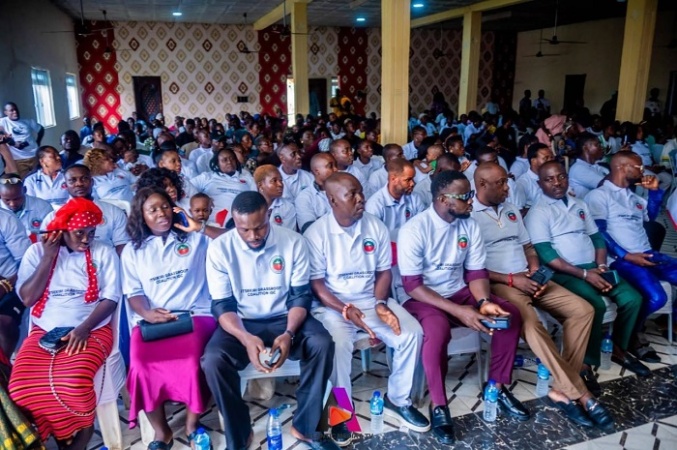
Fresh Dispute Emerges Over Sapele’s Historical Identity
A renewed debate over the historical ownership and identity of Sapele has intensified following a response by the Itsekiri Grassroots Coalition (IGC), Sapele Chapter, to claims that a 1943 court judgment established exclusive Okpe ownership of the area.
The controversy was triggered by comments attributed to the Coordinator of the Okpe Union Worldwide Youth Wing, Dr. Ereseyin Idolor, who reportedly cited a landmark 1943 judgment of the West African Court of Appeal as evidence that Sapele belongs solely to the Okpe ethnic nationality.
However, the Itsekiri Grassroots Coalition has strongly rejected that interpretation, arguing that the legal decision has been misunderstood and stretched beyond its original scope.
Coalition Questions Interpretation of Historic Judgment
In a statement issued by the group’s coordinator, Comrade Olayemi Uroye, the coalition maintained that the 1943 ruling dealt specifically with a defined parcel of land known at the time as Sapele Township and did not confer ownership rights over the entire modern-day Sapele Local Government Area.
According to the coalition, the judgment addressed approximately 510 acres of land and should not be interpreted as a determination of ownership over all communities and territories currently comprising Sapele.
The group argued that attempts to broaden the implications of the judgment amount to a misrepresentation of both the court’s decision and established legal principles governing land disputes.
Uroye contended that the doctrine of res judicata, which prevents matters already decided by a court from being relitigated, cannot be used to support claims extending beyond the specific subject matter addressed in the original case.
Historical Presence of Itsekiri Communities Highlighted
The coalition further asserted that numerous Itsekiri communities have maintained historical and ancestral ties to Sapele for generations.
Among the communities listed were Obotie, Ugbosien, Ogun-Aja-Ugbege, Aja-Imele, Aja-Ojigwo, Arowun, Ogorode, Uton-Iyatsere and Ugbekoko.
According to the group, these settlements should not be described as migrant or settler communities but rather as indigenous populations that have long contributed to the social and economic development of the area.
The coalition emphasized that Sapele evolved through the interactions of multiple ethnic groups whose histories became intertwined through trade, migration, fishing, navigation and settlement activities.
Colonial Records Enter Contemporary Debate
To support its position, the IGC referenced colonial-era documentation, particularly writings attributed to British Vice-Consul Captain H.L. Gallwey.
According to the coalition, Gallwey recorded in 1893 that Itsekiri settlements extended inland as far as Sapele, a statement the group believes supports evidence of longstanding Itsekiri presence in the region.
Historical records, colonial maps and traditional narratives have increasingly become central to contemporary debates concerning identity, territorial claims and political representation in parts of the Niger Delta.
Analysts note that disputes over historical interpretation are often complicated by overlapping migration histories, colonial administrative boundaries and evolving settlement patterns over several centuries.
Representation Concerns Add Political Dimension
Beyond the historical debate, the coalition expressed concerns regarding discussions surrounding constituency restructuring and political representation within Sapele and surrounding areas.
The group warned against any arrangement that could weaken the political influence of indigenous Itsekiri communities, stressing the need for inclusive representation that reflects the area’s multi-ethnic character.
According to the coalition, preserving political balance remains essential for maintaining peace and fostering cooperation among the various ethnic nationalities that call Sapele home.
Broader Implications for Community Relations
The latest exchange underscores the sensitivity of historical identity issues within the Niger Delta, where questions of ancestry, land ownership and political representation often intersect.
Observers note that while historical records and legal judgments remain important reference points, lasting solutions are more likely to emerge through dialogue, mutual respect and recognition of the diverse communities that have contributed to the growth of Sapele.
As discussions continue, stakeholders across ethnic lines are being urged to approach the issue with caution, ensuring that historical disagreements do not undermine peaceful coexistence and future development efforts.
