
Hezbollah’s Fibre-Optic Drones Reshape Israel-Lebanon Conflict
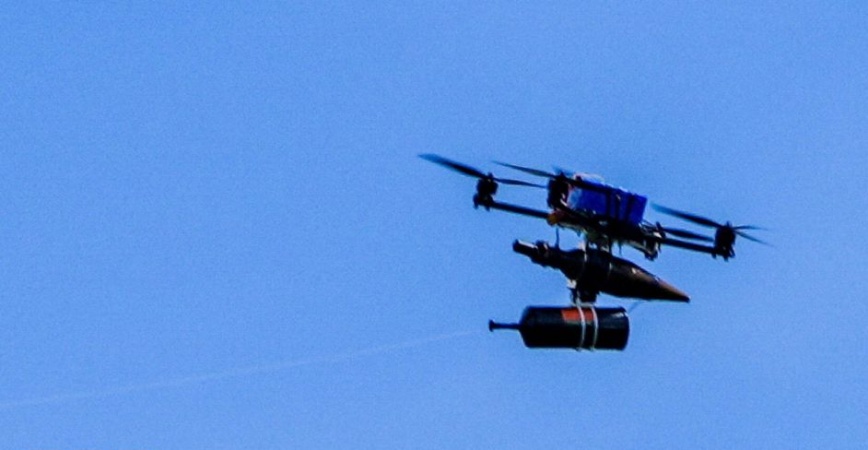
Hezbollah Expands Use of Fibre-Optic Drone Warfare
THE conflict along the Israel-Lebanon border is entering a new and more technologically complex phase as Hezbollah increasingly deploys fibre-optic drones against Israeli military positions and civilian communities.
Security analysts and Israeli officials now describe the small explosive-laden drones as one of the most dangerous tactical threats facing Israeli forces in northern Israel and southern Lebanon, despite an existing ceasefire arrangement that has struggled to contain hostilities.
According to Israeli military assessments and regional monitoring groups, several Israeli soldiers killed since the ceasefire came into effect have died in attacks involving fibre-optic drones, also known as First-Person View (FPV) drones.
The weapons, widely used in the Russia-Ukraine War, are now transforming battlefield tactics in the Middle East.
How Fibre-Optic Drones Operate
Unlike conventional drones that rely on radio signals vulnerable to electronic jamming, fibre-optic drones remain physically connected to their operators through ultra-thin optical cables.
This allows operators to maintain stable communication and direct visual control even in heavily contested electronic warfare environments.
Military experts say the drones fly at low altitude, carry explosive payloads and are capable of pursuing moving targets with precision.
Because they emit minimal detectable electronic signatures, they are significantly harder to intercept than rockets, artillery shells or traditional unmanned aerial vehicles.
Israeli communities near the Lebanese border have increasingly reported sudden attacks with little or no warning.
Residents of Shomera, one of the affected communities, described the psychological pressure created by the drones, which often appear silently before striking targets.
Lessons Imported From Ukraine
Defence analysts believe Hezbollah’s tactical adaptation reflects lessons learned from the Ukraine conflict, where FPV drones have become central tools of modern warfare.
The war in Ukraine demonstrated how relatively inexpensive commercial drone technology could inflict disproportionate damage on conventional military forces.
Israeli research organisations monitoring the conflict argue that Hezbollah has systematically integrated those battlefield lessons into its operations against Israel.
The Alma Research Center said the militant group has accumulated a growing stockpile of low-cost drones and trained operators capable of carrying out sustained attacks.
Experts estimate some of the drones cost only a few hundred dollars, making them economically difficult to counter through expensive missile defence systems.
Civilian Communities Increasingly Exposed
While many attacks target Israeli military personnel stationed in southern Lebanon, concerns are growing over the increasing vulnerability of civilian border communities.
Local officials in northern Israel say schools, roads and residential areas are now regularly threatened by drone incursions.
Residents describe a security environment where traditional warning systems offer limited protection because of the drones’ speed, size and unpredictable flight patterns.
The conflict has also intensified fears that the fragile ceasefire between Israel and Hezbollah may deteriorate into broader regional confrontation.
Israeli officials accuse Hezbollah of deliberately targeting civilian areas, while Hezbollah-aligned narratives frame the attacks as resistance operations against Israeli military occupation in southern Lebanon.
Israel Accelerates Counter-Drone Development
In response to the emerging threat, the Israel Defense Forces has reportedly intensified investment in anti-drone technologies.
Israeli defence firms are developing interception systems that combine sensors, automated targeting software and specialised ammunition designed to neutralise small FPV drones.
Some military positions have also adopted protective netting and camouflage methods inspired by battlefield practices in Ukraine.
However, Israeli security officials acknowledge that current countermeasures remain imperfect and that technological gaps still exist.
Military analysts note that the rapid evolution of drone warfare is forcing armies worldwide to rethink conventional battlefield doctrines.
Regional Tensions and Escalation Risks
The growing use of fibre-optic drones has added another layer of tension to an already volatile regional environment involving Israel, Hezbollah and Iran.
Israeli political leaders have threatened stronger military responses, with some officials calling for expanded operations inside Lebanon.
Prime Minister Benjamin Netanyahu recently vowed to respond forcefully to Hezbollah’s escalating drone attacks, while far-right figures within the Israeli government demanded broader retaliation against Hezbollah strongholds.
Observers warn that the continued evolution of drone warfare could increase the risk of miscalculation and prolonged instability along the border.
The conflict also illustrates how technological innovations developed in one war zone can rapidly spread into other geopolitical flashpoints, reshaping modern warfare beyond their original theatres of conflict.
