
Xi’s Warning To Trump: Accept China’s Rise Or Risk Global Conflict
News Crackers Features, For The Records, Foreign News geopolitics analysis, International Affairs 0

The Thucydides Warning: China’s Rising Confidence and America’s Uncertain Future
A Summit That Felt Less Like Diplomacy and More Like History
DONALD Trump arrived in Beijing hoping to project strength, revive economic momentum and demonstrate that the United States still commands global influence. Instead, many analysts now view the visit as something far more consequential: a public display of how dramatically the international balance of power may be changing.
The symbolism mattered. So did the language.
When Xi Jinping spoke of “changes unseen in a century,” he was not engaging in poetic diplomacy. That phrase has become deeply embedded in China’s strategic language. It signals Beijing’s belief that the American-led world order is weakening while China rises into a new historical position of dominance.
Xi first used the phrase prominently during his 2023 meeting with Vladimir Putin in Moscow. Repeating it in front of Trump carried unmistakable implications. It was China announcing that history itself is moving in Beijing’s direction.
The Meaning Behind the ‘Thucydides Trap’
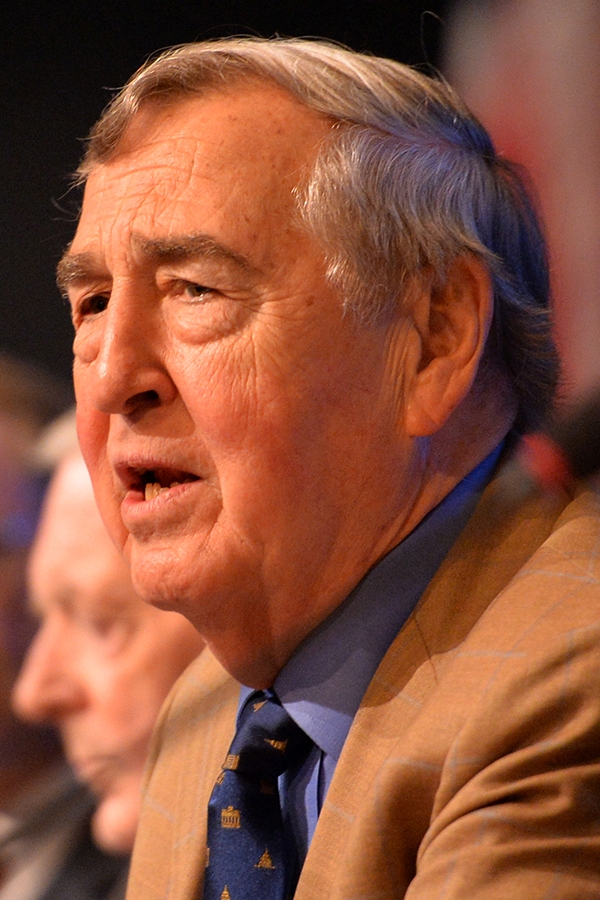
The most revealing moment came when Xi referenced the “Thucydides Trap,” a theory developed by Harvard political scientist Graham Allison.
The theory draws from the writings of the ancient Greek historian Thucydides, who argued that the rise of Athens and the fear it created in Sparta made the Peloponnesian War inevitable.
In modern geopolitical terms, the theory suggests that conflict often erupts when a rising power challenges an established superpower.
By invoking the theory directly to Trump, Xi was sending a strategic message: China sees itself as the rising Athens, while America increasingly resembles an anxious Sparta struggling to preserve fading dominance.
The warning was subtle but unmistakable. If the United States refuses to accommodate China’s rise, confrontation becomes increasingly likely.

China’s New Diplomatic Confidence
What stood out during the visit was not merely China’s confidence, but its willingness to express that confidence publicly.
Chinese officials reportedly described the United States as a “declining nation.” Such language would once have been unthinkable in formal diplomacy. Beijing traditionally preferred cautious rhetoric. Now it appears increasingly comfortable presenting itself as the future centre of global power.
Trump attempted to soften the impact by suggesting China was referring mainly to the Biden years, but the broader geopolitical signal remained intact. China had openly challenged America’s image as the indispensable global superpower.
Iran, Taiwan and the Fear of Escalation
Behind closed doors, discussions reportedly turned toward Iran and Taiwan — the two issues most capable of triggering direct confrontation between major powers.
China urged restraint over Iran, warning that another Middle Eastern war would destabilise global supply chains, damage energy markets and deepen economic uncertainty worldwide. Beijing reportedly viewed further escalation as reckless and potentially catastrophic.
At the same time, China delivered another warning regarding Taiwan. Beijing reiterated that Taiwan remains a non-negotiable “red line.” Any attempt by Washington to fundamentally alter the status quo could trigger direct confrontation between the world’s two largest powers.
For Beijing, Taiwan is not simply a territorial dispute. It is tied to national legitimacy, sovereignty and China’s broader vision of historical reunification.

The Contradiction Inside ‘America First’
Perhaps the most politically explosive aspect of the trip was the economic dimension.
Trump, whose political identity was built around tariffs, economic nationalism and reducing American dependence on China, reportedly sought massive Chinese investment into the United States.
Critics immediately pointed to the contradiction.
If China is simultaneously America’s greatest strategic rival and a necessary source of economic capital, then the old binary narratives begin collapsing. “America First” becomes harder to define when Chinese money is invited into American infrastructure, manufacturing and technology sectors.
Supporters argue that foreign investment strengthens the US economy. Critics counter that large-scale Chinese capital inevitably creates leverage and influence.
The debate reflects a larger truth about modern geopolitics: economic rivalry and economic interdependence now exist simultaneously.

Fear, Ego and the Psychology of Declining Power
The deeper relevance of the Thucydides Trap may not be military at all. It may be psychological.
History repeatedly shows that declining powers rarely accept loss of dominance calmly. Fear, pride and insecurity often shape decisions more than rational calculations.
That is why Xi’s message resonated so strongly with global analysts. He was not simply discussing China and America. He was invoking one of history’s oldest patterns: the instability created when an emerging power confronts an established empire unwilling to step aside.
The danger lies not only in military escalation, but in how nations interpret change itself. Rising powers become emboldened. Established powers become defensive. Fear hardens into ideology, and rivalry begins shaping every diplomatic decision.
A World Entering a New Era
Whether one agrees with China’s worldview or not, Beijing clearly believes history is tilting in its favour.
The United States still possesses unmatched military reach, enormous economic strength and powerful global alliances. But China increasingly sees itself as representing the future trajectory of global power — economically, technologically and strategically.
The Beijing summit revealed something larger than a disagreement between two presidents. It exposed the emerging architecture of a new geopolitical era — one where American dominance is openly questioned, China speaks with growing confidence and the world edges cautiously toward a future neither side fully controls.

