
Nigeria’s 2026 Budget: Big On Ambition, Heavy On Debt
Fiscal Accuracy and Legislative Oversight
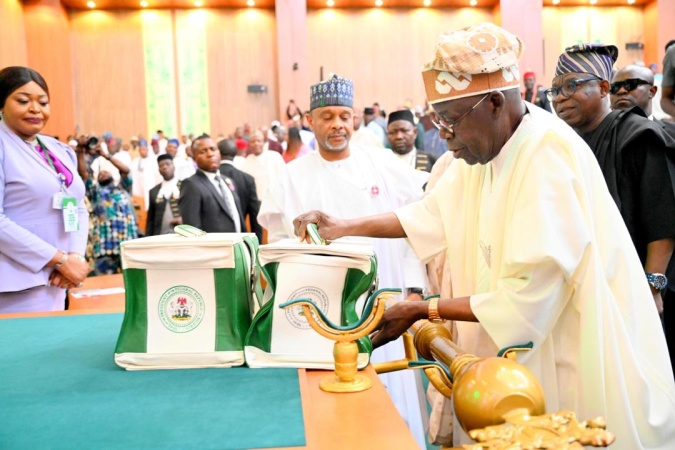
NIGERIA’S 2026 federal budget took an unexpected turn last Tuesday, as the Senate raised the size of President Bola Ahmed Tinubu’s initial proposal, citing minor miscalculations in his presentation. Barely five days after the President had presented a ₦58.18 trillion plan to a joint session of the National Assembly, lawmakers approved a revised figure of ₦58.472 trillion, effectively adding ₦292 billion to the executive estimate. The adjustment aligns the budget with the figure previously approved by the Federal Executive Council during preparatory discussions.
Senator Adeola Olamilekan, chairman of the Senate Committee on Appropriations, explained that while the discrepancy arose from minor errors in the President’s speech and supporting documents, the appropriation bill remains the authoritative document for legislative deliberation. “The official budget figure for deliberation is the one contained in the appropriation bill,” he emphasized, noting that the variation should not distract lawmakers or the public from the substance of the spending plan.
The Senate’s rapid approval of the budget for second reading reflects growing confidence in the fiscal framework. Senate Leader Opeyemi Bamidele described it as a “budget of consolidation,” aimed at stabilizing the economy and deepening ongoing reforms. The expenditure structure includes ₦4.097 trillion for statutory transfers, ₦15.909 trillion for debt servicing, ₦15.252 trillion for recurrent non-debt expenditure, and ₦23.214 trillion for capital projects through the Development Fund. The capital allocation—representing nearly 40 percent of total expenditure—signals a strategic focus on infrastructure, productivity, and private-sector-led growth.
While the government projects a deficit of about 4.28 percent of GDP against expected revenues of ₦34.33 trillion, senators stressed the importance of strict oversight to prevent waste, ensure efficiency, and guarantee that ambitious numbers translate into tangible benefits for Nigerians. For analysts, the episode highlights both the challenges of precision in large-scale budgetary exercises and the critical role of legislative scrutiny in safeguarding fiscal discipline.
