
Grassroots Politics Vs Elite Power: Revisiting Gowon’s 1993 Defeat
News Crackers Features, For The Records, History, Politics 0

Gowon’s Return to Politics
IN the build-up to Nigeria’s transition to civilian rule in the early 1990s, Yakubu Gowon sought to reinvent himself as a democratic leader.
Encouraged by political allies and segments of the elite, Gowon entered the race for the presidency under the National Republican Convention. His entry was widely interpreted as a test of whether former military rulers could successfully transition into civilian democratic politics.
Contest at the Grassroots Level
Contrary to expectations, Gowon’s first major challenge emerged not at the national stage but within the party’s local government primary system.
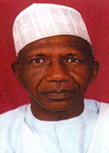
His opponent, Dalhatu Tafida, lacked Gowon’s national stature but possessed a critical advantage: a well-organised grassroots network.
While Gowon’s campaign leaned heavily on high-level endorsements, Tafida focused on securing delegate loyalty through systematic engagement at the ward level.
Strategic Miscalculations
Analysts have since pointed to a fundamental miscalculation in Gowon’s approach. His reliance on elite backing created an impression of inevitability, leading his camp to underestimate the importance of internal party dynamics.
Meanwhile, Tafida’s team quietly built influence where it mattered most—among the delegates who would ultimately determine the outcome.
Efforts to alter the balance, including reported financial inducements and incentives, proved ineffective against the entrenched loyalty Tafida had cultivated.
A Defining Electoral Outcome
When the votes were counted, the result was unequivocal. Tafida won by a landslide, securing 165 votes to Gowon’s 29.
The outcome not only ended Gowon’s presidential ambition but also highlighted the evolving nature of Nigerian politics, where institutional processes within parties began to outweigh traditional power hierarchies.

Aftermath and Wider Political Context
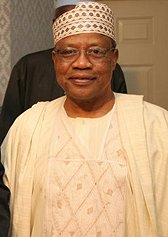
Despite his victory, Tafida did not become the NRC’s presidential candidate. The ticket eventually went to Bashir Tofa, who contested against Moshood Kashimawo Olawale Abiola in the 12th June election.

That election remains a watershed moment in Nigeria’s history, both for its credibility and for its controversial annulment by the military government under Ibrahim Babangida.
Lessons for Democratic Development
Gowon’s defeat offers enduring lessons for political actors and scholars alike. It demonstrates that:
-
Electoral success depends on organisational depth, not just reputation.
-
Grassroots mobilisation can outweigh elite endorsement.
-
Internal party democracy plays a critical role in candidate emergence.
The episode also reflects the broader tensions of Nigeria’s transition period, where old power structures confronted emerging democratic norms.
Conclusion
The failed comeback of Yakubu Gowon is more than a personal political story—it is a lens through which to examine Nigeria’s evolving democratic culture.
By exposing the limits of influence and the importance of political organisation, the 1993 NRC primary remains a pivotal moment in understanding how power is contested and negotiated within Nigeria’s political system.
