
From Apprentice To Conglomerate King: The Nuel Ojei Story
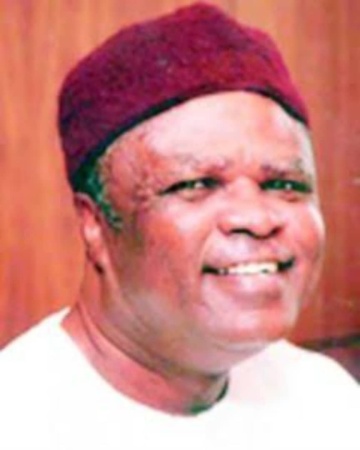
THE death of Chief (Dr.) Emmanuel “Nuel” Ojei at 74 has triggered an outpouring of tributes that go beyond ceremonial condolences, forcing a deeper national reflection on the life of a man who quietly shaped entire sectors of Nigeria’s indigenous industry. Delta State Governor, Rt. Hon. Sheriff Oborevwori, in a statement released by his Chief Press Secretary, Sir Festus Ahon, acknowledged the passing of the industrialist as a monumental economic and social loss, not only to his Issele-Uku roots but to the state and the country at large. Yet beneath the official mourning lies a bigger conversation: how a man who began as a young motor-company trainee went on to rewrite the possibilities for homegrown conglomerates in a market long dominated by foreign interests.
Ojei’s entrepreneurial journey began in 1973 at Rutam Motors, a foundational training ground that introduced him to the automotive business at a time when Nigeria’s local participation in the sector was still embryonic. Eight years later, in 1981, he founded Nuel Auto Distributors (NAD), a bold move that challenged the unwritten rules of an industry where dealership power and distributorship rights were tightly held by multinational networks. NAD soon secured exclusive agency for Mazda vehicles in Nigeria, a strategic partnership that placed Ojei at the intersection of mobility infrastructure, consumer markets, and corporate service networks. The company later expanded its technical footprint by partnering with Mercedes-Benz for authorised vehicle servicing, cementing NAD not merely as a dealership firm but as a technical gateway for global automotive maintenance standards within the country.
But Ojei’s ambition stretched far beyond car distribution. Through Nuel Ojei Holdings (NOH), he built a multi-sector empire spanning automotive, construction, petroleum, banking, and allied industries, positioning the conglomerate as a key employer of Nigerian labour and technical talent. At its peak growth years, NOH provided jobs for hundreds of Nigerians — a fact repeatedly cited in tributes but rarely interrogated in economic terms. For a state like Delta, where youth unemployment and industrial diversification have remained perennial challenges, Ojei’s businesses functioned as private-sector intervention hubs long before corporate social responsibility became a fashionable executive slogan.
His influence was also institutional. Delta State University recognised his role in business development with an honorary Doctorate in Business Administration in 2003, a credential that validated his contributions at a time when honorary degrees were not handed out as political pageantry but reserved for measurable impact. The Nuel Ojei Foundation further expanded his legacy beyond balance sheets, delivering educational support, healthcare outreach, and social interventions that filled critical public gaps in rural and semi-urban communities. For many beneficiaries, the foundation’s programmes were not seasonal philanthropy but life-defining lifelines, especially in education and health sectors where public funding constraints continue to stall human-capital development.
Governor Oborevwori’s tribute emphasised Ojei’s life as a model of innovation, service, and economic patriotism — words that resonate even louder in a country struggling to scale private industry with indigenous ownership. The governor’s condolence message, while heartfelt, also inadvertently highlighted a structural truth: in Nigeria, much of the country’s industrial progress has historically depended on individuals like Ojei — private industrialists who built capacity outside government frameworks, financed expansion through unconventional credit models, and generated employment without state subsidies. His passing closes not only a personal chapter but a broader economic era, raising pressing questions about succession, sustainability of indigenous conglomerates, and the weakening pipeline of industrialists emerging from apprenticeship-style origins into sectoral dominance.
