
Five Takeaways From Trump’s Tense Davos Speech
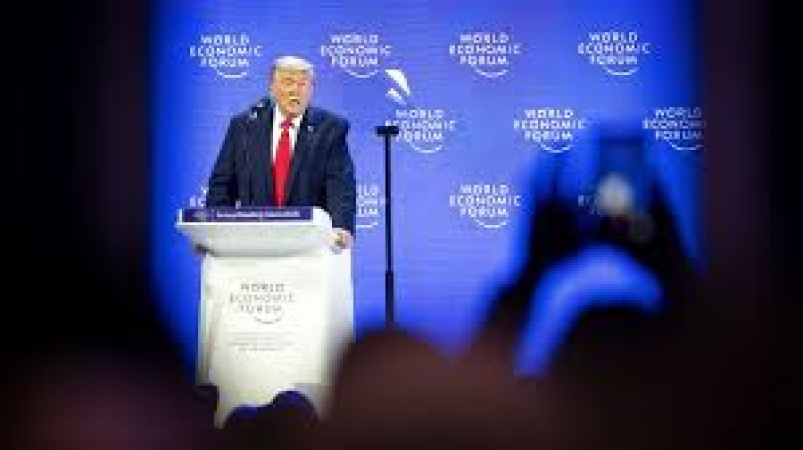
Five Takeaways From Trump’s Confrontational Davos Address
PRESIDENT Donald Trump’s appearance at the World Economic Forum in Davos delivered little reassurance to European leaders already uneasy about the state of the transatlantic alliance. His lengthy, grievance-laden speech mixed foreign policy demands, historical reinterpretations and personal insults, leaving many in the audience visibly unsettled. While a few conciliatory notes emerged later in the day, Trump’s remarks underscored widening tensions between Washington and its European partners.
1. A Clear Line on Military Force Over Greenland
The most closely watched portion of Trump’s speech concerned Greenland. For the first time, the president explicitly ruled out the use of military force to acquire the semi-autonomous Danish territory, stating: “I won’t use force.” The declaration provided immediate relief to European officials who had been bracing for a major diplomatic crisis.
Markets responded positively, reversing losses from earlier in the week. Still, Trump made clear that his ambition for Greenland remains unchanged. He insisted that the United States should ultimately own the territory, framing it as strategically inseparable from North America and warning that those who opposed him would be “remembered.”
2. A Revisionist Historical Argument
Trump justified his Greenland position by invoking World War II history, arguing that Denmark had failed to defend itself or Greenland and therefore owed the United States. He labeled Denmark “ungrateful” and questioned why Washington ever allowed it to retain control of the island.
His remarks included factual missteps, including repeatedly referring to Greenland as Iceland, but the message was unmistakable: Trump views American military power as the basis for geopolitical entitlement.
3. A Broadside Against Allies and Partners
Beyond Denmark, Trump used the Davos platform to air grievances against a wide range of countries. He derided Switzerland as prosperous only because of the United States and boasted about raising tariffs after a Swiss leader “rubbed me the wrong way.”
He mocked French President Emmanuel Macron’s appearance, issued a veiled threat toward Canadian Prime Minister Mark Carney, and warned that Canada “lives because of the United States.” The tone left many in the audience stunned into silence.
4. Culture, Immigration and Western Identity
Trump also revisited familiar themes on immigration and cultural identity, arguing that Europe had become “unrecognizable” due to mass migration. He framed Western success as the product of a “very special culture” that needed defending, drawing criticism for rhetoric that many interpreted as exclusionary.
His attack on Democratic Rep. Ilhan Omar, paired with disparaging remarks about Somalia, further reinforced the ideological edge of his speech.
5. A Subdued President, an Uncomfortable Audience
Though Trump appeared physically subdued after travel, his rhetoric grew sharper as the speech wore on. Early laughter gave way to long silences, nervous chuckles and, eventually, early exits from some attendees. His extended digressions—ranging from wind energy to domestic security deployments—tested the patience of an audience expecting economic clarity.
By the end, Trump seemed eager to conclude, signing off casually with: “I’ll see you around.”
