
Copper, Cash & Conditions: Why Zambia Rejected Washington’s Mega Health Pact
By ANDERSON CLIFF
Sovereignty Over Subsidy: Zambia’s Calculated Rebuff
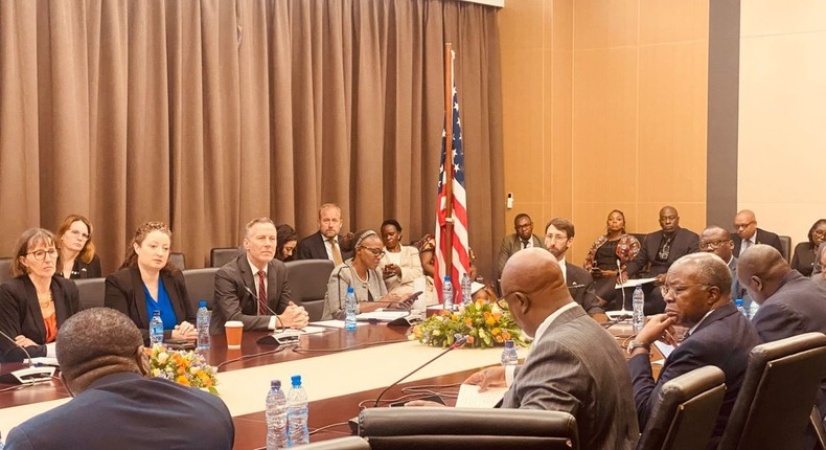
ZAMBIA has joined a growing list of African nations pushing back against what they describe as “strings-attached” Western assistance, halting a proposed health funding agreement worth more than $1 billion from the United States.
The draft agreement, which would have governed U.S. health support to Zambia over the next five years, aimed to combat HIV/AIDS and malaria, strengthen maternal and child healthcare, and improve epidemic preparedness. But Lusaka pulled back after revised versions of the document reportedly included clauses it deemed inconsistent with national interests.
The development signals a broader shift in how African governments are reassessing foreign aid—less as charity, more as negotiation.
The Clause That Changed Everything
According to reports, the draft included language suggesting funding could be withdrawn if Zambia and the U.S. failed to conclude a proposed “bilateral compact” by 1st April. That compact was allegedly linked to a mining partnership, raising concerns that essential health financing might be tied to strategic access to Zambia’s mineral wealth.
For a copper-rich country central to global critical mineral supply chains, the optics are politically explosive.
While Washington’s support would have regulated over $1 billion in assistance, Zambia was expected to commit roughly $340 million in co-financing during the same period—no small feat for a country navigating fiscal constraints and debt restructuring pressures.
The timing is delicate. In 2025, the U.S. disbursed approximately $598 million to Zambia’s health sector—about one-third of the national health budget. Much of that funding supports HIV treatment and maternal health services. Earlier in the year, Washington cut $50 million in medical aid after uncovering theft and resale of donated pharmaceuticals, already tightening the financing environment.
Against that backdrop, attaching additional geopolitical conditions to life-saving programs proved controversial.
Aid or Leverage?
Activists and analysts have questioned whether the deal blurred the line between humanitarian partnership and strategic leverage.
Owen Mulenga of the Treatment, Advocacy and Literacy Campaign called for transparency, saying public speculation about links between health financing and mining interests had not been adequately addressed.
Asia Russell, executive director of Health GAP, was more blunt, arguing that such arrangements risk prioritizing corporate or geopolitical interests over public health imperatives.
Though neither government has publicly confirmed the mining linkage, the perception alone has been powerful enough to derail the agreement.
Hichilema’s Self-Reliance Doctrine
President Hakainde Hichilema has previously signalled that Zambia must gradually reduce its dependence on foreign aid. In October 2025, he described aid cuts as “long overdue,” framing them as an opportunity for Zambia to take greater ownership of its development trajectory—even if the short-term risks are substantial.
His administration’s decision to halt negotiations reflects that philosophy. It also underscores a broader recalibration of Zambia’s foreign policy, as the country seeks to balance partnerships with strategic autonomy.
Critics warn, however, that the cost of sovereignty must not come at the expense of vulnerable populations. Zambia remains one of the countries most heavily affected by HIV/AIDS in Southern Africa, and any disruption in funding could have immediate consequences.
A Continental Pattern
Zambia is not alone.
Zimbabwe recently stepped away from talks over a $350 million U.S. health package, citing sovereignty concerns over clauses that would grant long-term access to national health data.
Meanwhile, in West Africa, Burkina Faso signed a $147 million health agreement with Washington that includes significant domestic co-financing—$107 million—and commitments to digital health infrastructure and laboratory upgrades.
The message is clear: co-financing and accountability provisions are becoming standard features of modern aid architecture. What varies is how governments interpret the balance between partnership and pressure.
The Bigger Question
Zambia’s move forces a difficult conversation. When does development assistance become strategic bargaining? And how should nations weigh urgent public health needs against long-term sovereignty?
For Washington, Africa’s mineral wealth is undeniably strategic, especially in an era defined by competition over critical resources. For Lusaka, the question is whether tying health financing to broader economic agreements undermines the spirit of humanitarian cooperation.
In halting the deal, Zambia has chosen principle—at least for now—over immediate funding certainty. Whether that gamble strengthens national autonomy or strains health services will depend on what alternative financing arrangements emerge.
One thing is certain: the era of unquestioned aid acceptance is fading. African governments are reading the fine print more carefully than ever.
