
Churches Unite As Igbo Mark Survival Of Civil War
A New Annual Ritual of Remembrance and Faith
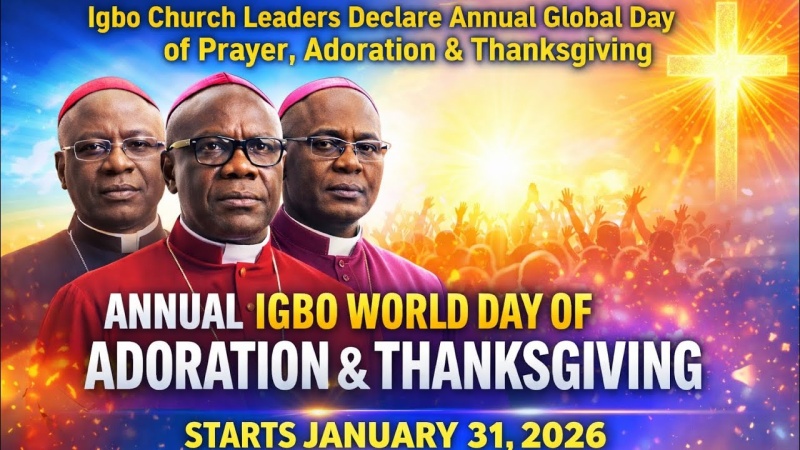
THE Igbo Nation today begins a new annual tradition of adoration and thanksgiving, fifty-six years after the Nigeria-Biafra Civil War ended in 1970.
The three-year conflict remains one of the darkest chapters in Nigeria’s history, claiming millions of lives and leaving enduring consequences for the Igbo people. Organisers say the annual thanksgiving is intended not only to remember the tragedy, but to acknowledge survival and divine preservation.
Coordinated Global Observance
The programme, known as the Igbo Day of Adoration and Thanksgiving, is being organised by Igbo Christian leaders in partnership with prominent socio-cultural groups including Ohanaeze Ndigbo and Nzuko Umunna.
Church services will take place across Igbo communities worldwide, with organisers emphasising unity across geography, denomination and social status.
Healing Historical Wounds
Speaking in Enugu, Archbishop Sosthenes Eze said the initiative creates space for reflection, reconciliation and renewed faith, especially in light of ongoing challenges confronting the Igbo people.
He said the civil war was designed to wipe out the Igbo race, but their survival remains a testament to divine favour.
According to him, setting aside a dedicated day of thanksgiving is necessary to reposition the Igbo people spiritually and morally.
Learning From History
The clerics noted that the initiative is not political, but rooted in Christian principles of gratitude and worship. Drawing parallels with biblical and historical examples, they said societies that survive catastrophic events often mark such moments with thanksgiving.
Bishop Obi Onubogu described the observance as a conscious decision to heal wounds rather than reopen them.
“Gratitude allows healing to begin. Bitterness only prolongs pain,” he said.
A Long-Delayed Act of Thanksgiving
Emeritus Archbishop Amos Madu said the Igbo people failed to offer collective thanksgiving after the war, which he believes contributed to years of hardship.
“This is a moment to correct history,” he said.
A Call to Unity
Professor Eze Ituma said the programme is expected to promote unity, moral renewal and collective purpose.
The religious leaders urged Igbo people everywhere to participate, describing spiritual revival as a foundation for social and economic transformation.
