
Africa, Caribbean Get $10 Billion Lifeline As Middle East Conflict Bites
Emergency Response to Escalating Global Crisis
IN response to the economic fallout from the Middle East conflict, the African Export-Import Bank has launched a $10 billion Gulf Crisis Response Programme (GCRP) to support African and Caribbean economies.
The initiative comes amid escalating tensions that have disrupted global energy markets, trade routes, and financial systems, with developing regions bearing the brunt of the impact.
Afreximbank said the programme is aimed at providing immediate relief while positioning member states for long-term economic stability.
Immediate Relief: FX Support and Import Stability
A major focus of the programme is addressing foreign exchange shortages and ensuring the continued importation of essential goods.
The bank will provide short-term liquidity to help countries maintain supplies of critical commodities such as fuel, LNG, fertilisers, food, and medicines.
These interventions are expected to ease pressure on national currencies, reduce inflationary spikes, and prevent supply disruptions.
Strategic Support for Key Sectors
The programme also targets sectors most affected by the crisis, including tourism and aviation, which have seen declines due to reduced global mobility and economic uncertainty.
At the same time, Afreximbank is supporting exporters in the energy and minerals sectors to scale operations and benefit from favourable global pricing conditions.
This dual approach—relief and opportunity—aims to balance short-term survival with long-term growth.
Infrastructure and Economic Transformation
Beyond emergency funding, the GCRP includes a strong focus on infrastructure development.
Projects in energy, transportation, and logistics—many of which have been stalled by the crisis—will receive financing support to ensure completion.
These investments are expected to strengthen regional integration, improve trade efficiency, and reduce dependence on external systems.
Why Africa and the Caribbean Are Vulnerable
The Gulf region plays a central role in global supply chains, particularly for oil, gas, and fertilisers. Disruptions in this region have cascading effects on countries that depend on imports and external financing.
For many African and Caribbean nations, exposure to shipping routes, remittances, and tourism flows linked to the Gulf has amplified the economic shock.

Leadership Perspective and Strategic Continuity
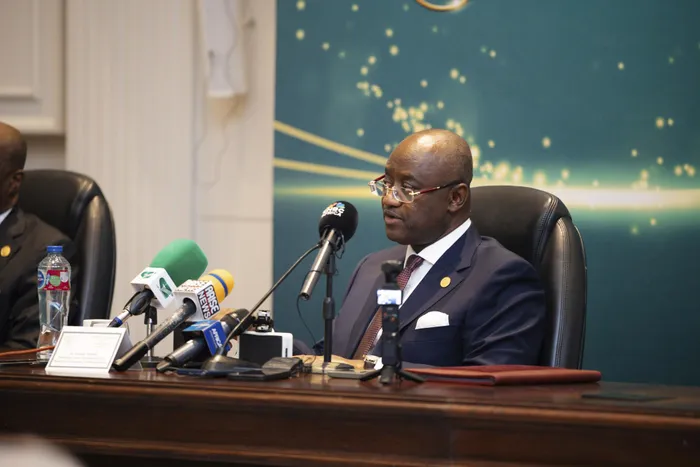
Afreximbank President Dr. George Elombi described the intervention as a necessary and timely response to evolving global risks.
He emphasised that the programme aligns with the bank’s long-standing role in supporting member states during periods of economic turbulence.
The GCRP follows earlier interventions deployed during major global disruptions, reinforcing Afreximbank’s position as a key stabilising force in emerging markets.
Navigating an Uncertain Global Landscape
As the Gulf crisis continues to evolve, its economic consequences remain unpredictable. However, Afreximbank’s $10 billion facility provides a critical buffer for affected economies.
The success of the programme will depend on how effectively countries leverage the support—not only to weather the current storm, but to build stronger, more resilient economic systems for the future.
