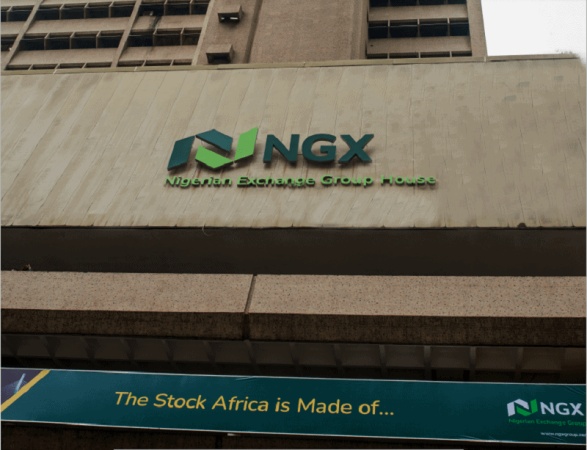
Heavy Sell-Off Hits Nigerian Equities Despite Strong Trading Volume

Bearish Sentiment Returns to Nigerian Exchange
AFTER weeks of impressive gains, the Nigerian stock market experienced a sharp reversal as investors collectively lost ₦2.341 trillion following widespread selling across several major listed companies.
The session marked another extension of the market’s recent losing streak, with declining prices among blue-chip and mid-tier stocks outweighing gains recorded by a small number of advancing equities.
The downturn reduced total market capitalisation to ₦146.564 trillion, while the benchmark All-Share Index declined by 1.57 per cent to settle at 228,401.92 points.
Although the correction moderated the market’s Year-to-Date return to 46.78 per cent, analysts note that Nigerian equities remain among the strongest-performing investment assets this year.
Large Companies Drive Market Weakness
The biggest drag on market performance came from several highly capitalised companies whose price movements significantly influence the overall index.
MTN Nigeria, Unilever Nigeria, and Learn Africa each declined by 10 per cent, making them the session’s biggest losers.
They were joined by AustinLaz and Abbey Mortgage Bank, both of which posted losses of 9.94 per cent, reflecting widespread selling across consumer goods, telecommunications and financial services stocks.
Overall, 47 companies closed lower, while only 13 stocks recorded gains, illustrating the dominance of bearish sentiment throughout the trading session.
Selective Buying Persists
Despite the broad market decline, investors continued to accumulate shares in selected companies viewed as offering attractive value.
UPDC topped the gainers’ chart with a 9.23 per cent increase.
Other positive performers included Coronation Infrastructure Fund, Sovereign Trust Insurance, Neimeth Pharmaceuticals, and Livestock Feeds, all posting moderate gains during the session.
Their performance suggested that while investors remained cautious, buying interest had not disappeared entirely.
Trading Volume Defies Market Decline
One of the most notable features of the trading session was the sharp increase in market activity despite falling prices.
Nearly one billion shares changed hands during the day, generating transactions worth ₦43.73 billion across more than 61,800 deals.
The figures indicate that investors were actively repositioning their portfolios rather than exiting the market altogether.
Ikeja Hotel Plc accounted for the largest share of trading activity, leading both trading volume and transaction value, underscoring strong investor interest in the stock.
Investors Watch Economic Signals
Financial market observers say recent movements reflect changing investor expectations as participants respond to evolving economic conditions.
Profit-taking has become increasingly common after the market’s strong rally earlier in the year, particularly among institutional investors seeking to secure returns before potential shifts in monetary policy, corporate earnings announcements and broader macroeconomic developments.
Analysts expect the market to remain sensitive to company earnings, inflation trends, exchange-rate movements and interest-rate decisions, all of which are likely to influence investor confidence in the weeks ahead.
While short-term volatility may continue, many market professionals believe fundamentally sound companies could attract renewed buying interest once the current wave of profit-taking begins to ease.