
Wiretap Allegations: El-Rufai Faces Cybercrime Charges
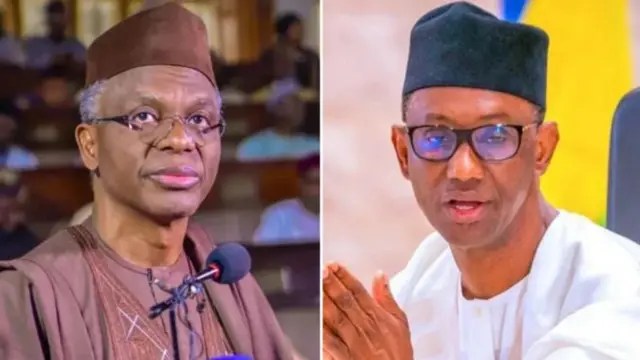
FG Files Criminal Charges Against El-Rufai Over Alleged NSA Phone Interception
Cybercrime Charges Filed at Federal High Court
THE Federal Government has filed criminal charges against former Kaduna State governor, Nasir El-Rufai, accusing him of unlawfully intercepting the telephone communications of the National Security Adviser, Nuhu Ribadu.
The charges, marked FHC/ABJ/CR/99/2026, were lodged before the Federal High Court, Abuja Judicial Division. The Federal Republic of Nigeria is listed as complainant, with El-Rufai named as sole defendant.
According to court documents, prosecutors allege that during an appearance on Arise TV’s Prime Time programme on 13 February 2026, El-Rufai admitted that he and others intercepted the communications of the NSA.
The Federal Government is relying heavily on that televised statement as the foundation of its case.
Breakdown of the Charges
In count one, the prosecution argues that El-Rufai’s alleged admission constitutes an offence under Section 12(1) of the Cybercrimes (Prohibition, Prevention, etc.) Amendment Act, 2024.
Count two accuses him of failing to report individuals allegedly involved in the interception, contrary to Section 27(b) of the same Act.
The third count invokes Section 131(2) of the Nigerian Communications Act, alleging that El-Rufai and others still at large used technical systems to unlawfully intercept communications in a manner that compromised public safety and national security.
Legal analysts say the case could test the scope of Nigeria’s strengthened cybercrime legislation, particularly as it applies to high-profile political actors.
As of press time, no arraignment date had been fixed.
EFCC Invitation and Detention
Separately, El-Rufai on Monday honoured an invitation by the Economic and Financial Crimes Commission at its Abuja headquarters. The former governor, now a chieftain of the African Democratic Congress, arrived at the anti-graft agency’s office accompanied by supporters.
A security official confirmed his presence, while a source within the commission indicated that he would remain in custody overnight in connection with ongoing corruption investigations tied to his tenure as governor.
Those investigations stem from findings by the Kaduna State House of Assembly’s 2024 Ad-Hoc Committee report, which raised concerns regarding financial management practices, debt accumulation and contract procedures under his administration.
Civil Society Weighs In
The development triggered a protest by the Mega National Movement for Good Governance (MNMGG) at the EFCC headquarters in Abuja.
The group’s spokesperson, Comrade Muhammad Abdullahi, urged El-Rufai not to politicise the investigation. He argued that the matter concerns public accountability rather than political persecution.
The group cited Section 15(5) of the 1999 Constitution, which mandates the state to abolish corrupt practices and abuse of office. It called on both the EFCC and the Independent Corrupt Practices Commission to conduct thorough, evidence-driven investigations.
EFCC Response
EFCC spokesperson, Dele Oyewale, who received the protesters, assured that due process would be followed. He emphasised that the commission respects citizens’ right to peaceful protest and pledged that investigations would be conducted professionally.
Political and Legal Implications
The convergence of cybercrime charges and corruption investigations significantly raises the stakes for the former governor. Legal experts note that if convicted under the Cybercrimes Amendment Act, penalties could include substantial fines and imprisonment.
Politically, the case adds fresh tension to Nigeria’s already polarised political climate, particularly as El-Rufai remains an influential figure within opposition politics.
The unfolding proceedings will likely test not only the interpretation of cybercrime law but also the resilience of Nigeria’s anti-corruption and national security institutions.
