
Inside The Senate: How Late-Night Pressure Killed Real-Time E-Transmission Ahead Of 2027
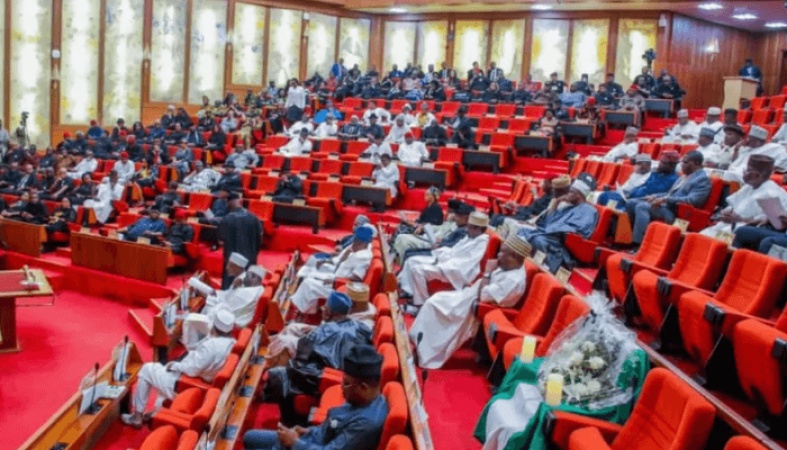
How Senate Rejected Mandatory Real-Time Transmission
FRESH details have emerged on how the Senate quietly dropped a proposal that would have made real-time electronic transmission of election results mandatory ahead of the 2027 general election, despite earlier consensus among lawmakers, INEC, and key stakeholders.
The controversial decision occurred during clause-by-clause consideration of the Electoral Act, 2022 (Repeal and Enactment) Bill, 2026 (SB. 903), where a critical amendment to Clause 60(3) was unexpectedly removed from the final version passed by the Red Chamber.
The rejected amendment sought to compel presiding officers of the Independent National Electoral Commission (INEC) to upload polling unit results to the INEC Result Viewing Portal (IReV) in real time immediately after votes are counted and the mandatory Form EC8A is completed.
A Clause That Had Wide Support
The proposal originated from the Senate Committee on Electoral Matters, chaired by Senator Simon Lalong (APC, Plateau South), and had earlier enjoyed overwhelming backing within the Senate.
According to parliamentary sources, the Senate initially worked with a version of the bill that explicitly mandated electronic transmission of results in real time. An ad-hoc committee led by Senator Niyi Adegbonmire (APC, Ondo Central) had also endorsed the provision after more than a year of consultations with INEC, civil society organisations, political parties, and election experts.
Zonal public hearings and joint stakeholder sessions reportedly reached a consensus that electronic transmission must be clearly provided for in law to avoid a repeat of the legal disputes and credibility concerns that followed the 2023 general elections.
Clause 60(3) of the committee report stated clearly:
“The Presiding Officer shall electronically transmit the results from each polling unit to the IReV portal in real time…”
Many senators assumed the clause would sail through without resistance.
Last-Minute Intervention by Three Senators
Sources familiar with the proceedings said the turning point came late into plenary when three ranking senators from the South allegedly intervened.
According to one source, the lawmakers approached Senate President Godswill Akpabio and urged him to retain the wording of the 2022 Electoral Act rather than adopt the proposed amendment.
Akpabio reportedly ruled in favour of maintaining the existing legal framework, which allows electronic transmission but does not explicitly mandate real-time uploads. In place of “electronic transmission,” the word “transfer” was substituted — a change made without renewed debate on the Senate floor.
The adopted provision now reads:
“The Presiding Officer shall transfer the results… in a manner as prescribed by the commission.”
Critics argue that the change introduces ambiguity and restores discretion to INEC, effectively nullifying the original intent of the amendment.
Emergency Sitting Amid Public Backlash
The Senate’s decision triggered widespread criticism from civil society groups, labour unions, legal experts, and political observers, forcing the Red Chamber to convene an emergency plenary sitting on Tuesday 10 February 2026.
The sitting, announced in a notice signed by the Clerk of the Senate, Emmanuel Odo, followed the Senate’s earlier adjournment to 24 February to allow lawmakers participate in budget defence sessions.
Though the notice did not state the agenda, parliamentary sources say the session is aimed at approving votes and proceedings to clarify what was actually adopted — a necessary step before the conference committee can harmonise the bill with the House of Representatives’ version.
Wider Changes to the Electoral Act
Beyond Clause 60(3), the Senate made far-reaching changes to other provisions of the bill.
It dropped stiffer penalties for vote buying and selling, reduced INEC’s notice period for elections from 360 to 180 days, and shortened timelines for political parties to submit candidates’ lists.
Lawmakers also retained the Permanent Voter Card (PVC) as the sole means of voter identification, rejecting electronically generated alternatives, and struck out provisions aimed at easing proof of non-compliance in election petitions.
NBA, Labour Raise the Alarm
Reacting to the controversy, Nigerian Bar Association (NBA) President Afam Osigwe, SAN, said the delay in concluding the amendment process was concerning but might not derail the 2027 elections if INEC proceeds under existing law.
However, the Nigeria Labour Congress (NLC) took a harder stance, threatening mass action and a possible boycott of future elections if real-time electronic transmission is not clearly mandated.
NLC President Joe Ajaero warned that ambiguity around result transmission could undermine public trust and plunge the country into another electoral crisis.
Civil society leaders echoed similar concerns, accusing the Senate of undermining national consensus and engaging in what they described as a “legislative ambush.”
As pressure mounts, attention now turns to the emergency sitting — and whether lawmakers will revisit a decision many Nigerians believe could define the credibility of the 2027 polls.
